8 Best eSIM for Australia 2026: Telstra vs Optus Coverage


Picture this. You are three hours into a drive along the Great Ocean Road. You need to verify the next campsite booking, check whether the coastal road ahead is closed for wildlife crossings, and your Google Maps is spinning.
Your eSIM chose a provider running on Vodafone AU infrastructure, which covers the cities brilliantly but starts dropping out the moment you pass Lorne. That scenario sends more travellers hunting for a better eSIM for Australia than any roaming bill ever will.
Australia covers 7.7 million km² and three carrier networks — Telstra, Optus, and Vodafone (now TPG Telecom) — divide that territory unevenly. Telstra covers 98.8% of the population and is the only carrier that genuinely reaches the Red Centre, the Nullarbor Plain, and remote Queensland coast.
I tested eight providers across the East Coast corridor and one Outback run to determine which eSIM for Australia plans actually hold signal where it matters. Here is what the data showed.
The Telstra Dependency Problem No One Warns You About

Australia's mobile geography is unlike any other country in this guide. Every major city — Sydney, Melbourne, Brisbane, Perth, Adelaide — is well covered by all three carriers. The problem surfaces the moment your itinerary leaves the coast.
A drive from Brisbane toward Longreach, or from Adelaide up to Coober Pedy, moves through hundreds of kilometres where Telstra is the only carrier holding signal. Optus covers 98.5% of the population, but population coverage is not land coverage.
This creates a direct implication for choosing your eSIM for Australia. If your entire trip stays within city limits and the main coastal highway, Optus-connected plans cover everything perfectly and often at a lower price per GB.
But travellers doing the East Coast right, which means detours to the Atherton Tablelands, Fraser Island ferry crossings, or the Daintree Rainforest — will encounter Optus black spots that a Telstra-partnered plan handles without issue.
When evaluating any eSIM for Australia, specifically check whether the provider states “Telstra” or “Optus” as the partner network. Providers that list “major local networks” without naming the carrier are typically routing you through Optus or a Vodafone MVNO. That is fine for city trips. It is not fine for the Outback.
Road Trip Data Reality: What 14 Days Across Australia Actually Consumes
Most travellers landing in Sydney dramatically underestimate how much data the Australian road trip format burns. This is not a compact country with short drives between attractions. The Sydney to Cairns run along the Pacific Coast Highway covers 2,800 km.
The Melbourne to Adelaide Great Ocean Road detour adds another 600 km. At each stop you need Google Maps rerouting, accommodation apps, Australian weather radar (essential in Queensland cyclone season), and tethering a second device if you are working remotely.
Standard guidance for an Australian East Coast trip is 15 to 30GB for two weeks. A city tourist spending 10 days between Sydney and Melbourne manages on 8 to 10GB. A campervanner doing the full circuit with daily hotspot tethering needs 30GB minimum.
8 Best eSIM for Australia 2026 Across Every Travel Type
| eSIM Provider | Australian Network Edge | Ideal Traveller |
|---|---|---|
| Airalo | Optus 4G East Coast corridor | Budget Sydney to Cairns tourist |
| Saily | Fastest urban 5G tested | Digital nomad in Sydney or Melbourne |
| GigSky | Stable Telstra-connected plans | Rural and Outback road trippers |
| Amigo eSIM | Tethering for campervans | Multi-device travelling couples |
| MobiMatter | Lowest cost on 20GB bundles | Working Holiday Visa backpackers |
| Maya | Unrestricted hotspot sharing | Remote workers on long stays |
| iRoamly | Daily increment short plans | Auckland to Sydney weekend visitors |
| Lotso Travel | Zero-touch activation setup | First-time long-haul arrivals |
1. Airalo
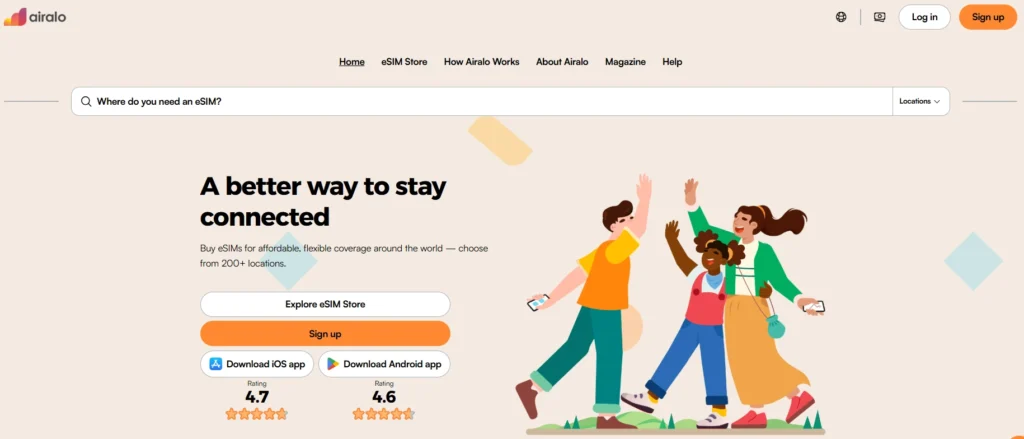
Airalo routes its Australia eSIM through Optus 4G and 5G infrastructure, which delivers excellent performance across the East Coast corridor from Melbourne to Cairns.
Plans for Australia start at $4.50 for 1GB valid 30 days, scaling to 20GB at $37. The sweet spot for standard two-week East Coast backpacking is the 10GB tier, which handles navigation, social media, and accommodation booking comfortably between hostel WiFi stops.
Tethering is permitted on Airalo's Australian plans, which is a detail many competitors omit. This provider suits budget tourists doing the classic tourist circuit without venturing into remote territory.
Why Airalo for Australia eSIM: The combination of Optus backbone coverage, allowed tethering, and the widest plan range from 1GB to 20GB makes Airalo the most practical option for the majority of travellers sticking to the East Coast corridor. The app's balance notifications are particularly useful on longer trips.
2. Saily
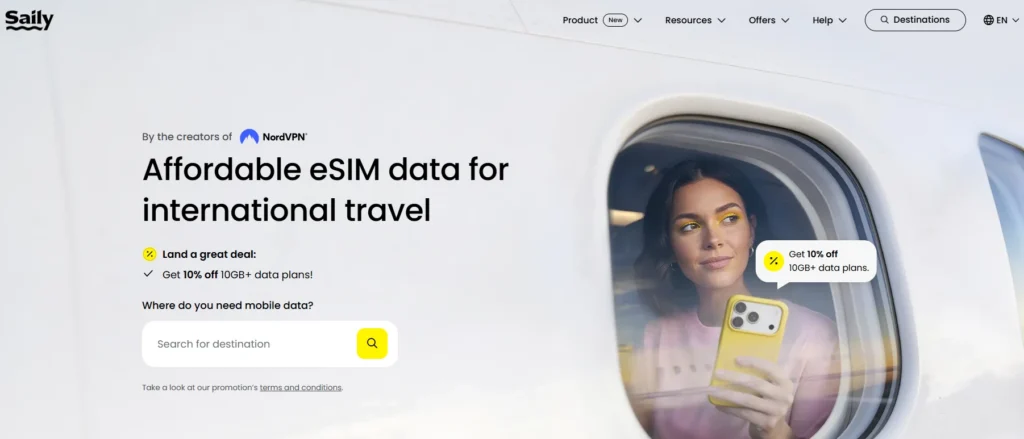
Saily is the fastest provider tested across Sydney CBD and Melbourne's inner suburbs in 2026.
The reusable eSIM profile architecture suits frequent Australia visitors, journalists, corporate travellers, and seasonal workers — who need to top up the same profile without scanning a new QR code on every return trip.
Plans scale from modest starter bundles up to 100GB on the Ultra tier for long-stay digital nomads who work remotely from Australian cities. The Trustpilot rating of 4.6 out of 5 is the highest among providers on this list.
3. GigSky
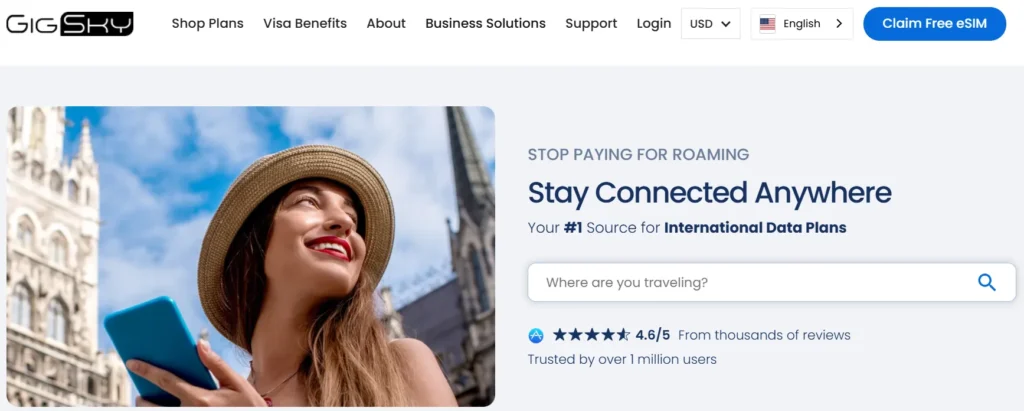
GigSky earns the top recommendation for any traveller whose Australian itinerary goes beyond the populated coast.
Their network partnerships for Australia include access to Telstra's infrastructure, which is the deciding factor for Outback travel.
Monthly subscription billing through GigSky One also works well for Working Holiday Visa holders spending three to twelve months in Australia, where buying individual plans repeatedly becomes expensive and administratively tedious.
Why Gigsky for Australia eSIM: The Telstra network access combined with monthly billing makes Gigsky uniquely suited to two specific Australia travel types — the Outback road tripper and the long-stay WHV holder. No other provider on this list addresses both scenarios as cleanly.
4. Amigo eSIM
Amigo handles the campervan traveller scenario better than most.
The confirmed tethering across every plan tier means couples sharing a campervan can run both phones, a tablet for entertainment, and a laptop for remote work off a single Amigo data connection without any plan restrictions.
Plans start from $5 and the global footprint of 190 countries covers add-on New Zealand legs and Pacific Island detours that Australian east coast trips frequently include.
5. MobiMatter
MobiMatter's marketplace model delivers its sharpest value on large Australia bundles. A 20GB Australia plan sourced through the MobiMatter aggregator consistently undercuts fixed-price providers by 15 to 25%.
The 30-day validity period covers the standard Working Holiday Visa tourist month, and the ability to browse and compare carrier options before purchasing gives experienced eSIM buyers a meaningful cost advantage over brand loyalty purchases.
6. Maya
Maya takes an explicit stance on hotspot tethering across its Australia plans. Where Airalo permits tethering and Saily restricts it on base tiers, Maya builds hotspot access as a central feature.
Long-stay remote workers renting apartments in Sydney or Melbourne for one to three months are the primary audience here.
The flat data bundles extend to larger sizes that support consistent daily laptop use without the anxiety of daily data caps triggering mid-afternoon.
7. iRoamly
iRoamly addresses the underserved short-visit segment for Australia. Many travellers from New Zealand, Singapore, or Hong Kong fly into Sydney or Melbourne for a three-day business trip or long weekend.
Buying a 30-day plan for a 72-hour visit wastes money on 27 days of unused validity. iRoamly's daily increment purchasing lets you buy exactly three days of Australian connectivity, with the hotspot included.
8. Lotso Travel
Lotso Travel removes every technical barrier for first-time eSIM users arriving in Australia. The APN configures automatically. The carrier handshake happens without any user input beyond the QR scan.
For travellers who have never used a travel eSIM and are slightly apprehensive about managing cellular settings on their phone, Lotso Travel's guided setup walks through each step clearly and the profile activates without any troubleshooting.
Choosing the Right eSIM for Australia for Your Specific Route
1. Telstra vs Optus — Which Network Your eSIM Must Use
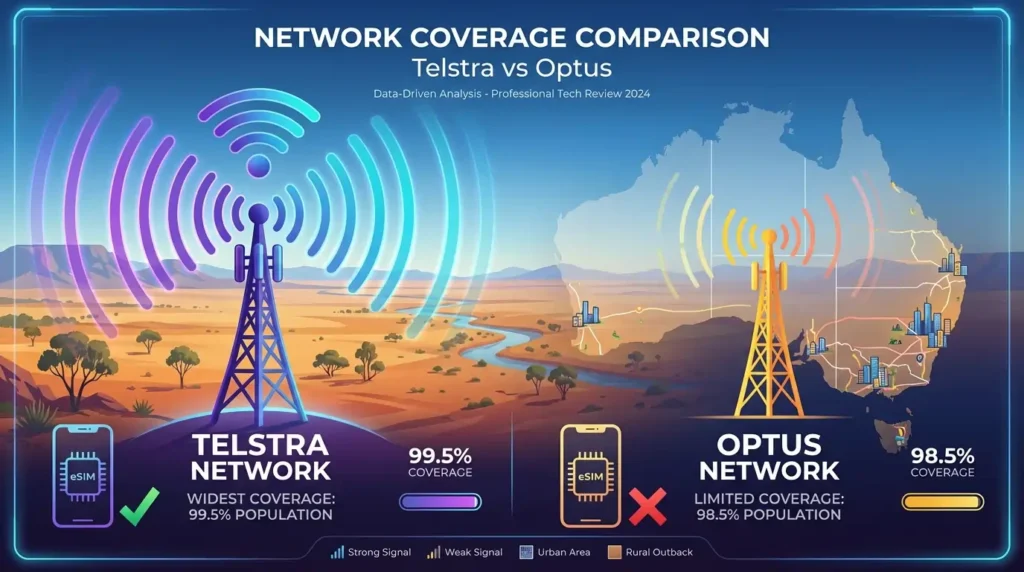
Telstra holds 98.8% population coverage and is the only network with meaningful signal across the Outback, the Cape York Peninsula, and the Nullarbor Plain. Optus covers 98.5% of the population, which sounds similar but translates to a significantly smaller landmass coverage outside coastal cities and regional towns.
For any itinerary that includes Alice Springs, Uluru, Coober Pedy, or remote Queensland, explicitly confirm that your provider uses Telstra as the Australian network partner before purchasing. For East Coast-only trips, Optus delivers perfectly adequate speed at a slightly lower cost.
2. How Much Data the East Coast Circuit Actually Needs
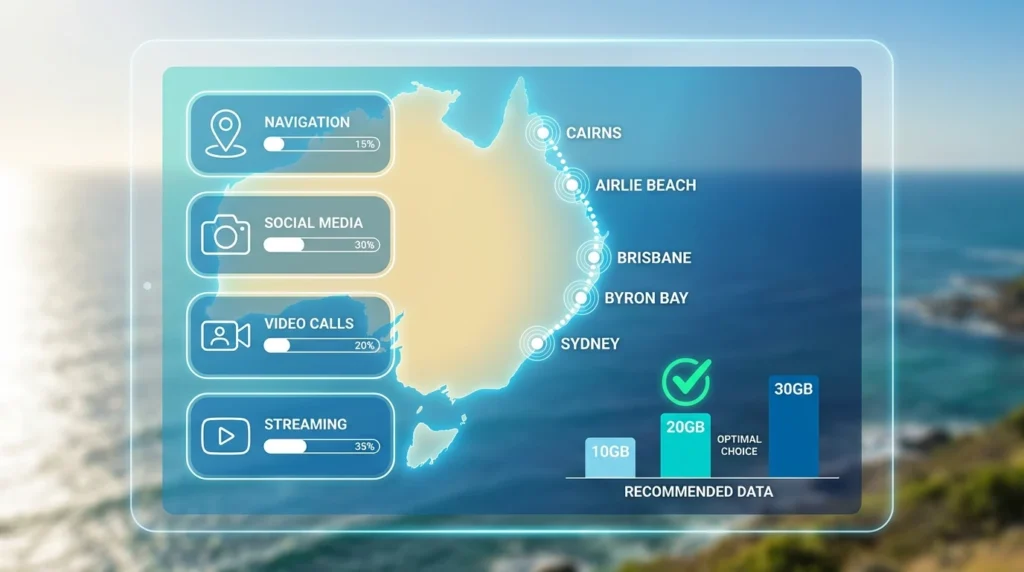
A 14-day Sydney to Cairns East Coast trip running Google Maps continuously, booking accommodation nightly through, and using WhatsApp with photo sharing requires 10 to 15GB. Travellers tethering a laptop for remote work add 5 to 10GB on top of that daily. Road trippers doing the full circuit with campervan hotspot sharing for two people should budget 25 to 30GB minimum. Buy more than you think you need — Australian data plans are cost-effective and running out in rural Queensland carries a real inconvenience cost.
3. Plan Validity Windows and the Working Holiday Visa Reality
Standard Australia tourist visas last 90 days. Working Holiday Visas allow 12 months. Most eSIM for Australia plans offer 7-day, 15-day, or 30-day validity windows. WHV holders travelling for three to twelve months will find Gigsky's monthly subscription model significantly cheaper over time than purchasing individual 30-day plans repeatedly.
MobiMatter's 30-day maximum validity covers standard tourist stays cleanly. Travellers spending more than 30 days should calculate the renewal cost across their full stay before committing.
4. Device Compatibility at Sydney Airport
Australia's three carrier networks all operate on 4G Band 28 (700 MHz), which most modern unlocked smartphones support. However, some older iPhone models and budget Android devices do not support Band 28, which is critical for rural signal penetration in regional Australia.
Confirm your device supports this frequency band if travelling beyond major cities. Telstra's Outback coverage relies heavily on 700 MHz propagation over long distances. Phones without Band 28 will drop signal significantly sooner than those that include it.
5. Price Reality for an Australian eSIM vs Local Prepaid
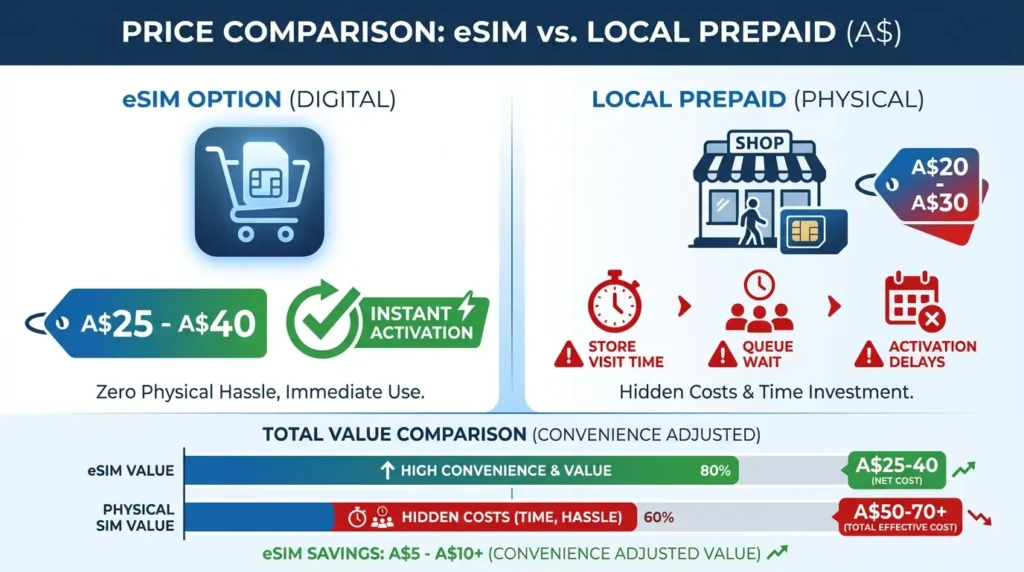
A Telstra prepaid SIM purchased at Sydney Airport or a supermarket starts at around AUD $30 for 10GB valid 28 days. Travel eSIM plans from Airalo for 10GB cost approximately USD $20 to $22. At current exchange rates, the pricing is broadly comparable. The eSIM advantage is not primarily cost. It is convenience — no physical counter, no passport check, no queue, instant activation from home before your flight.
Australia eSIM Frequently Asked Questions
What is an eSIM for Australia?
An Australia eSIM is a digital SIM profile installed via QR code before or after landing. It connects your unlocked phone to Telstra, Optus, or Vodafone AU networks without requiring a physical SIM card purchase at the airport. Activation takes under five minutes and the profile is stored permanently inside your phone's eSIM chip.
How do I install an eSIM for Australia before my flight?
Purchase your plan online, receive the QR code by email, and scan it through iPhone Settings then Cellular then Add eSIM, or Android Settings then Network then Add eSIM. The profile downloads and sits in standby mode until your phone detects an Australian carrier tower on arrival at Sydney, Melbourne, or any other entry airport.
Which eSIM for Australia has the best rural coverage?
Gigsky's Telstra-partnered plans provide the strongest rural and Outback coverage. Telstra is Australia's only carrier with meaningful signal across Alice Springs, Uluru, and the Nullarbor Plain. If your route stays on the East Coast, Airalo's Optus-connected plans cover every major tourist stop reliably.
How much does an Australia eSIM cost in 2026?
Australia eSIM plans start at $1.89 per 1GB from Saily and $4.50 per 1GB from Airalo. A 10GB Australia plan for a standard two-week trip costs between $20 and $25 from most providers. Large bundles of 20GB are available from Mobimatter at the most competitive per-GB rates on this list.
Does an Australia eSIM work in New Zealand?
Most Australia-specific single-country plans do not cover New Zealand. If your trip includes both countries, purchase a separate New Zealand plan or choose a provider like Amigo or Gigsky with global coverage that can add a New Zealand profile alongside your Australia plan.

Final Thoughts
Australia rewards proper preparation. The distances involved mean that mobile connectivity can shift from convenient to critical very quickly once you leave the coast.
Saily is the top pick for city-based nomads and frequent Sydney-Melbourne business travellers who value speed and a reusable profile. Gigsky earns the Outback recommendation specifically because of its Telstra network access, which no other provider on this list can match for remote Australian travel. Amigo is the campervan choice for unrestricted hotspot tethering across multi-device setups.
For your first eSIM for Australia experience, buy 20% more data than you think your trip requires. Australia is too vast to run out of signal and data at the same time.
How we test eSIMs
iPhone 15 Pro Max
iPhone 17 Pro Max
Samsung Galaxy S25 ultra
iPad Pro M4
32+ eSIM Providers Tested
150+ Speed Tests Verified
10+ Countries Covered
Why You Can Trust eSIMNinja
We buy every eSIM plan with our own money — no freebies, no sponsored reviews. What you read is what we genuinely experienced.
We keep receipts. Every eSIM is personally purchased.