10 Best eSIM for Cruise Ships 2026 (Sea + Port)

Your cruise ship pulls into Cozumel. You have six hours to explore. But your phone reads “No Service” and the ship WiFi package you paid $189 for does not extend past the gangway.
That single port day without data means no maps, no restaurant lookups, no ride hailing, and no sharing photos until you walk back on board. Multiply that across seven ports and you have a real connectivity problem.
Cruise ship WiFi runs between $15 and $50 per device per day through satellite links, and speeds often crawl when 3,000 passengers compete for bandwidth.
An eSIM for Cruise Ships solves the port side of this equation. Some providers now solve the open water side too.
I have tested eSIM profiles on Mediterranean, Caribbean, and Alaska itineraries, activating them at each port and tracking speeds from gangway to shore excursion and back. This guide covers the 10 best providers that actually perform for cruisers in 2026.
How an eSIM for Cruise Ships Actually Works Between Port and Open Water
An eSIM for cruise ships is a digital SIM profile you install before departure that connects your phone to land based cellular networks each time your ship docks.
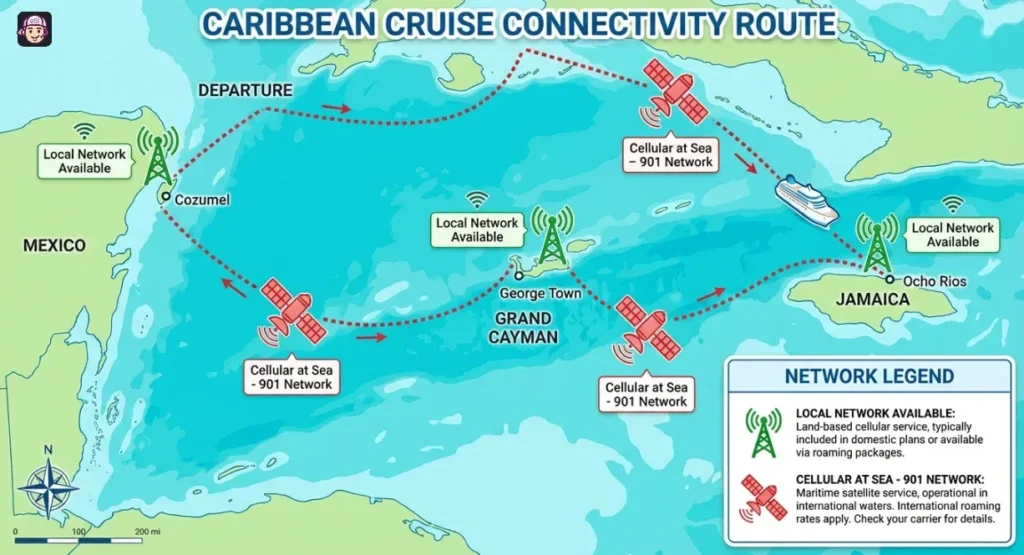
Most eSIM providers deliver data only when your vessel is within range of a coastal tower or moored at a port. Your phone grabs the local 4G or 5G signal in Jamaica, Santorini, or Juneau the moment you step off the ship.
At open sea, the picture changes. The Wireless Maritime Services network (known as Cellular at Sea) runs satellite powered cellular towers on over 200 cruise ships operated by Royal Caribbean, Carnival, Norwegian, and others.
When your ship passes into international waters, your phone displays “Cellular at Sea” or “901” if it picks up this network. Only one eSIM provider currently partners with WMS to deliver data at sea. Every other provider on this list functions as a port day eSIM, which still saves you hundreds compared to ship WiFi.
The smartest strategy for most cruisers combines two layers. Use a regional eSIM for cruise ships that covers all your port countries under one plan.
Then pair it with either the ship WiFi package or a Cellular at Sea compatible plan for sea days. This hybrid approach typically costs 50% to 70% less than buying the full cruise WiFi package alone.
For an eSIM for cruise ships, regional multi country plans outperform single country plans because most itineraries hit 4 to 8 different nations. Prioritise providers offering tethering, so you can share port data with a travel companion or tablet.
At Sea vs In Port Performance Matrix for eSIM on Cruise Ships 2026
| eSIM Provider | At Sea Coverage | Port Countries |
|---|---|---|
| Saily | No (port only) | 150+ |
| Airalo | No (port only) | 200+ |
| Amigo eSIM | No (port only) | 100+ |
| GigSky | Yes (290+ ships) | 200+ |
| MobiMatter | No (port only) | 200+ |
| Billion Connect | No (port only) | 200+ |
| Maya | No (port only) | 120+ |
| Lotso Travel | No (port only) | 80+ |
| Instabridge | No (port only) | 190+ |
| iRoamly | No (port only) | 147 |
1. Saily
Saily earned its reputation among cruisers through strong Caribbean and Mediterranean port coverage bundled with a built in VPN.
The Caribbean plan covers 29 countries including Jamaica, Aruba, Curaçao, Barbados, and Martinique, which maps neatly onto popular Eastern and Western Caribbean itineraries. A 10GB plan valid for 30 days starts at $8.99, giving you enough data across multiple port stops without rationing.
The VPN protects you when connecting to café and terminal WiFi at busy ports like Nassau or Cozumel. Every Saily plan is data only and activates the moment your phone detects a land based tower at port.
👉Get Saily for Cruise Ships
Pros
Cons
Why Saily for Cruise Ships: On a 7 night Caribbean cruise hitting Jamaica, Grand Cayman, and Cozumel, the Saily regional plan covers all three ports under one profile. The VPN is not a gimmick here. Port WiFi in cruise terminals is notoriously unsecured and Saily handles that without a separate app.
2. Airalo
Airalo gives cruisers the widest destination flexibility of any port day eSIM for cruise ships. The Caribbean “Island Hopper” plan covers 23 island nations including Antigua, Barbados, St. Lucia, Jamaica, the Bahamas, and Trinidad.
For Mediterranean sailings, the Europe regional plan blankets 39 countries on a single profile, meaning your phone switches networks automatically as you move from Barcelona to Marseille to Naples without reinstalling anything.
I activated Airalo on a 14 day Caribbean cruise and had working data at every port except Dominican Republic and the French side of St. Maarten. Plans start at $5 for 1GB across 7 days on regional packs.
Pros
Cons
Why Airalo for Cruise Ships: A cruiser doing 8 ports across 3 different countries does not want to buy 3 separate eSIMs. Airalo's regional profile handles the switching automatically, and the top up option means you never commit to more data than your itinerary actually uses.
3. Amigo eSIM
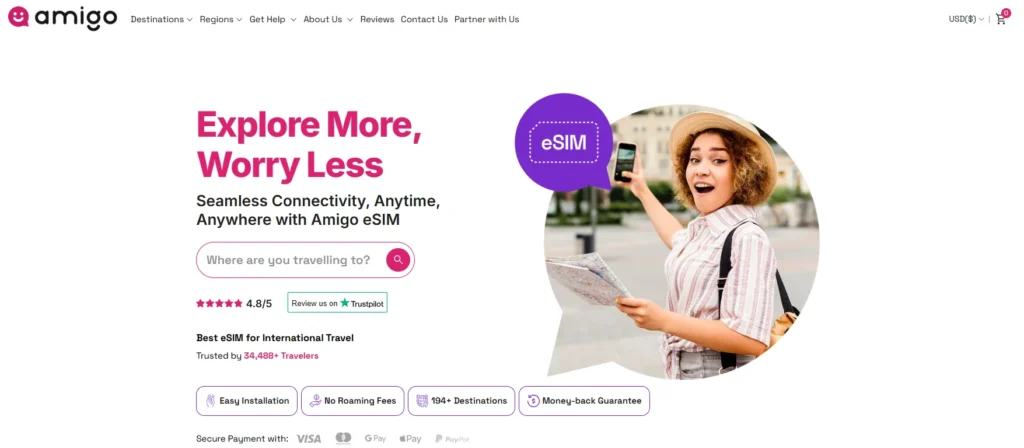
Amigo builds its eSIM for cruise ships value around tight regional bundles designed for multi country routes. Mediterranean cruisers benefit most here because Amigo's Europe bundle wraps Spain, Italy, France, Greece, Croatia, and Turkey into one plan.
That covers the core ports on virtually every Western and Eastern Med itinerary. The interface keeps things stripped back. You pick a region, choose a data size, scan the QR code, and you are ready for your first port stop.
For cruisers who want reliable European port data without sorting through hundreds of options, Amigo delivers a clean experience.
👉Get Amigo eSIM for Cruise Ships
Pros
Cons
4. GigSky
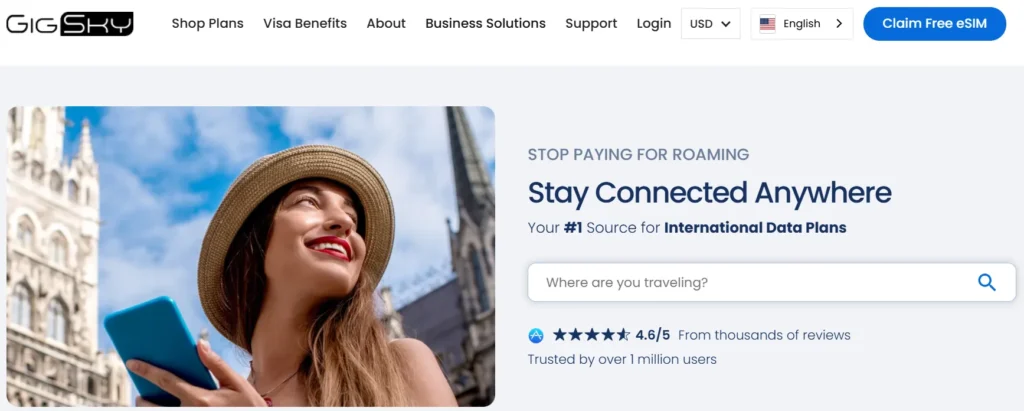
GigSky is the only eSIM for cruise ships that actually works at open sea. Through a direct partnership with Wireless Maritime Services, Gigsky connects to the Cellular at Sea satellite network running on 290+ cruise vessels including Royal Caribbean, Carnival, Princess, and Norwegian ships.
The Cruise + Land plans bundle at sea data with port country coverage under one profile. You install once before boarding and your phone switches between the ship's cellular network and land towers automatically at each port.
Plans range from 512MB for $19.99 to 10GB for $123.19 with validity from 1 to 30 days. World cruise plans stretch up to 120 days for extended voyages. The free 100MB trial lets you test at sea connectivity on your specific ship before spending anything.
👉Get GigSky for Cruise Ships
Pros
Cons
Why Gigsky for Cruise Ships: No other provider on this list connects at open sea. If your itinerary includes multiple consecutive sea days (transatlantic, world cruise, Pacific repositioning) and you need WhatsApp or email access between ports, Gigsky is the only realistic eSIM for cruise ships option.
5. MobiMatter
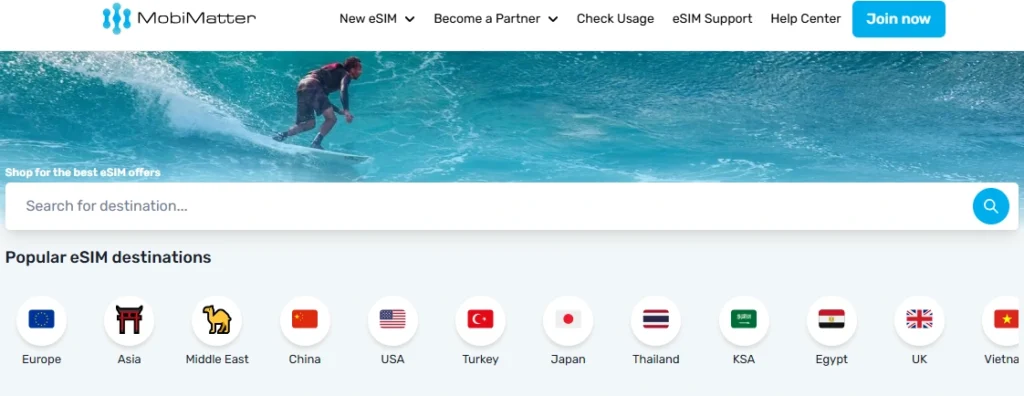
MobiMatter aggregates eSIM for cruise ships plans from dozens of underlying carriers, which means cruisers can compare per GB rates and pick the cheapest option for each port region.
A Caribbean data plan starts around $3.79 for 1GB, and bulk packages for 30 days come in significantly cheaper than buying direct from any single provider. The marketplace model lets you filter by your exact cruise route. Doing an Alaska cruise with stops in Juneau and Ketchikan?
Filter for US plans. Doing a Mediterranean loop? Filter for Europe regional. The flexibility is the point. Some carriers on the marketplace also offer longer validity plans stretching to 365 days, which suits passengers doing back to back cruises or world sailings.
Pros
Cons
6. Billion Connect

Billion Connect routes its eSIM for cruise ships coverage through redundant carrier partnerships, meaning your phone connects to at least two local operators at each port country.
This matters on a cruise because you are docked for 6 to 10 hours and cannot afford to debug a dead signal while your group leaves for a tour. The BC eSIM app handles activation through QR code in under three minutes. Coverage spans 200+ countries with 5G support where available.
Pricing starts around €2.30 for entry level plans with data packages from 300MB upward. The 24/7 live support is useful when activation issues pop up in a foreign port at 7am.
Pros
Cons
7. Maya
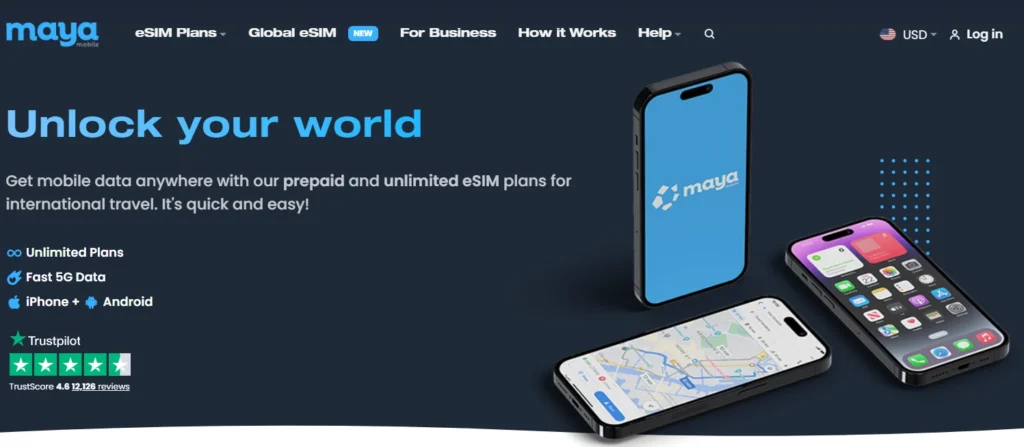
Maya appeals to cruisers taking extended voyages because its eSIM for cruise ships plans auto renew for up to 180 days. On a 90 day world cruise with 30+ port stops, you do not want to manage a new plan every month.
Maya's unlimited option provides 3GB to 5GB of daily high speed data before throttling, which covers navigation, social media uploads, and video calls home during each port day. Pricing runs from $6.29 for 1GB on limited plans.
The unlimited daily model averages $2.25 to $5.40 per day depending on the port region. For world cruisers and repositioning voyages, the set it and forget it approach removes one more thing from an already complex itinerary.
Pros
Cons
Why Maya for Cruise Ships: A world cruise passenger docking at 30+ ports over 90 to 120 days needs an eSIM for cruise ships that renews quietly in the background. Maya's auto renewal handles this without the passenger touching their phone settings once mid voyage.
8. Lotso Travel
Lotso Travel keeps its eSIM for cruise ships pricing transparent with fully prepaid fixed data packages. A 20GB plan for 15 days runs around $13, which is enough for 5 to 7 port days of heavy browsing, photo uploads, and navigation.
There are no recurring charges, no subscriptions, and no auto renewal traps. You buy the data you need and it stops when it runs out. The hotspot feature is included free, letting two cruisers share one plan at port.
For budget conscious passengers who want a simple purchase without comparing 50 marketplace options, Lotsotravel does the job with zero surprises.
Pros
Cons
9. Instabridge
Instabridge pairs its eSIM for cruise ships data with a global WiFi map showing over 20 million free hotspots. At busy cruise ports like Nassau, Philipsburg, and Piraeus, free WiFi exists in terminals, cafés, and tourist areas.
Instabridge maps those hotspots and lets you jump between them to conserve your paid gigabytes for moments when free WiFi drops out. The pay as you go model starts from $2.00, meaning you only pay for cellular data you actually consume.
For a cruiser who spends most port time near the terminal and tourist strip, the WiFi map alone can cut paid data use in half.
Pros
Cons
10. iRoamly
iRoamly covers up to 147 countries with unlimited data plans that include fair use daily caps. For cruisers on routes that hit unusual port calls in the Middle East, Africa, or Central Asia, iRoamly fills gaps that other eSIM for cruise ships providers leave open.
The global plan works across continents without buying separate regional packs for each ocean. Pricing starts around $8 for shorter trips with unlimited options offering full speed until a 2GB to 3GB daily threshold before reduced speeds.
The straightforward plan structure means you pick one option before boarding and forget about connectivity management for the rest of your voyage.
Pros
Cons
Signal Behaviour and Network Switching on an eSIM for Cruise Ships
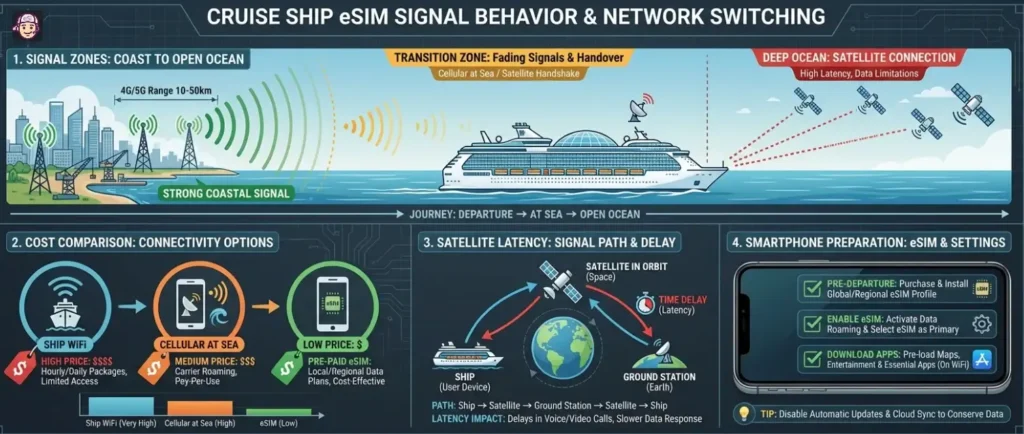
1. Coastal Handoff Zones and Tower Range for eSIM on Cruise Ships
When your vessel approaches land, your eSIM for cruise ships tries to grab the nearest coastal cell tower. Most towers reach 12 to 20 nautical miles offshore depending on terrain and height. This means you often get a land signal before you physically dock.
On departure, your signal fades as the ship passes beyond tower range. During coastal sailing days where the ship hugs the shoreline (Norwegian Fjords, Greek Islands, Inside Passage Alaska), your eSIM for cruise ships may hold a workable connection for hours between ports.
Pick a provider with automatic APN configuration so the handoff between countries happens without manual input.
2. Cellular at Sea vs Ship WiFi Cost Breakdown for Cruise Ships
Ship WiFi packages from Royal Caribbean, Carnival, and Norwegian typically run $15 to $30 per day for basic browsing and $40 to $60 per day for streaming tier access.
A 7 day Caribbean cruise WiFi bill lands between $175 and $420. By contrast, a regional eSIM for cruise ships covering port days costs $15 to $30 total for the entire voyage.
Even adding Gigsky's at sea plan at $19.99 for 512MB, the combined eSIM spend for port plus sea days undercuts the ship WiFi package dramatically. The savings increase on longer voyages where ship WiFi packages compound daily.
3. Satellite Latency and What It Means for eSIM for Cruise Ships at Sea
At sea connectivity through Cellular at Sea runs via satellite, which introduces latency of 500ms to 800ms depending on the satellite constellation and weather.
Video calls work but feel slightly delayed. Messaging apps like WhatsApp and iMessage function normally. Streaming video buffering is common. At port, your eSIM for cruise ships connects to terrestrial 4G or 5G towers with typical latency under 50ms, so everything runs as it would on land.
Manage your expectations accordingly. Use sea days for messaging and light browsing. Save heavy uploads and video calls for port days.
4. Device Preparation Before Boarding with an eSIM for Cruise Ships
Install your eSIM for cruise ships profile on WiFi at home before your departure date. Confirm your phone is carrier unlocked and eSIM compatible (iPhone XR or newer, Samsung Galaxy S20 or newer, Google Pixel 3 or newer).
Set your home SIM as the voice line and the eSIM as the data line using dual SIM settings. Turn off data roaming on your home carrier to prevent accidental charges on the ship's maritime network.
Activate the eSIM profile only when you reach your first port to avoid burning validity days while still at the embarkation terminal.

Final Thoughts
An eSIM for cruise ships does not need to be complicated. GigSky is the clear pick if you need data at open sea, and the free trial makes testing it painless.
Saily and Airalo handle port day coverage across Caribbean and Mediterranean routes reliably and affordably. Maya suits world cruise passengers who want 180 day auto renewal without managing plans mid voyage. Use code ESIMDUDE for 15% off Gigsky, 12% off Amigo, and 10% off Saily.
Install everything on WiFi at home before you board. Then put the phone in your pocket and enjoy the sailing.
How we test eSIMs
iPhone 15 Pro Max
iPhone 17 Pro Max
Samsung Galaxy S25 ultra
iPad Pro M4
32+ eSIM Providers Tested
150+ Speed Tests Verified
10+ Countries Covered
Why You Can Trust eSIMNinja
We buy every eSIM plan with our own money — no freebies, no sponsored reviews. What you read is what we genuinely experienced.
We keep receipts. Every eSIM is personally purchased.