8 Best eSIM for Digital Nomads 2026: Stay Connected Anywhere


You land in Bali, fire up your laptop, and the villa's Wi-Fi is $18 a day and drops every time you join a client call. That is not a hypothetical.
It is the default reality for digital nomads who have not yet sorted a reliable eSIM for digital nomads before departure. Roaming on a home carrier plan can run $300 in a single week across Southeast Asia. A solid travel eSIM costs a fraction of that and activates before you board.
The global eSIM market crossed $4 billion in 2026. I have personally activated and tested plans across Southeast Asia, Europe, and Latin America, comparing hotspot stability, throttle thresholds, and activation speed from airports and coworking spaces.
Below are the 8 best eSIM for digital nomads this year, with honest assessments of what works and what does not.
What Every eSIM for Digital Nomads Must Actually Do
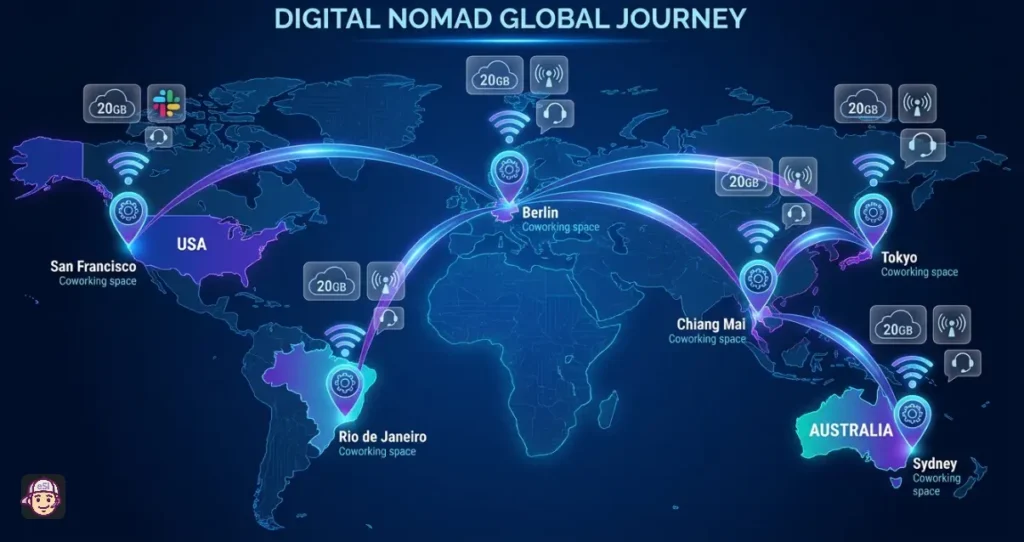
A tourist eSIM survives a 5-day city break. An eSIM for digital nomads needs to handle a 3-month stint across six countries, power 20GB of Slack uploads, run a laptop hotspot at a coworking space, and keep client calls stable on a café connection in Medellín.
The technical mechanism is straightforward. You download a carrier profile via QR code or app, and the eSIM activates on local carrier infrastructure.
The critical nomad-specific factors are tethering allowance, daily throttle thresholds, and whether one profile covers multiple countries without reinstalling.
Regional multi-country plans outperform single-country local plans for most nomads because crossing a border should not require hunting for a new QR code.
For eSIM for digital nomads, regional unlimited or high-data plans outperform budget pay-per-GB options because tethering a laptop burns through small caps fast. Always confirm hotspot is enabled before purchasing, not buried in fine print.
8 Best eSIM for Digital Nomads 2026 Reviewed
| eSIM Provider | Primary Strength | Ideal User |
|---|---|---|
| Amigo eSIM | Hotspot on all plans | Remote workers tethering laptops |
| GigSky | Single profile, all countries | Frequent country-hoppers |
| Saily | Built-in privacy tools | Security-conscious nomads |
| Airalo | Per-country flexibility | Multi-destination nomads |
| MobiMatter | Aggressive pricing | Budget-first nomads |
| Maya | Regional plan depth | Long-stay remote workers |
| Lotso Travel | Pre-departure flexibility | Forward-planning nomads |
| iRoamly | Transparent top-ups | Irregular-travel nomads |
1. Amigo eSIM
Amigo eSIM covers 128 countries and differentiates itself from almost every other eSIM for digital nomads option by enabling hotspot tethering across all plan types, including the $6 country plans and the $25 global package.
For nomads whose entire laptop workflow depends on a phone hotspot during coworking sessions, that is not a minor feature. European coverage spans 37+ countries with solid 4G/5G speeds, and the money-back guarantee softens the risk on first activations.
👉Get Amigo eSIM for Digital Nomads
Key Features:
Pros
Cons
Why Amigo eSIM for Digital Nomads: Hotspot-on-all-plans plus 4G/5G across 128 countries covers the most common nomad workflow. The 12% discount with ESIMDUDE brings the global plan below most comparable providers.
2. GigSky
Gigsky operates as a full MVNO rather than a reseller, which gives it a different technical foundation than most eSIM for digital nomads providers on this list.
The single eSIM profile handles automatic network switching across 190+ countries without reinstalling plans per destination, a feature that digital nomads on r/digitalnomad consistently flag as their deciding factor.
The free 100MB trial lets you verify activation works on your device before committing. Unlimited plan throttling kicks in around 2.5GB per day, which handles moderate nomad use but challenges content creators uploading large files.
👉Get GigSky for eSIM Digital Nomads
Key Features:
Pros
Cons
Why Gigsky for Digital Nomads: The MVNO single-profile approach removes QR code management fatigue across long nomad trips. The 15% discount with ESIMDUDE makes the premium pricing more justifiable.
3. Saily
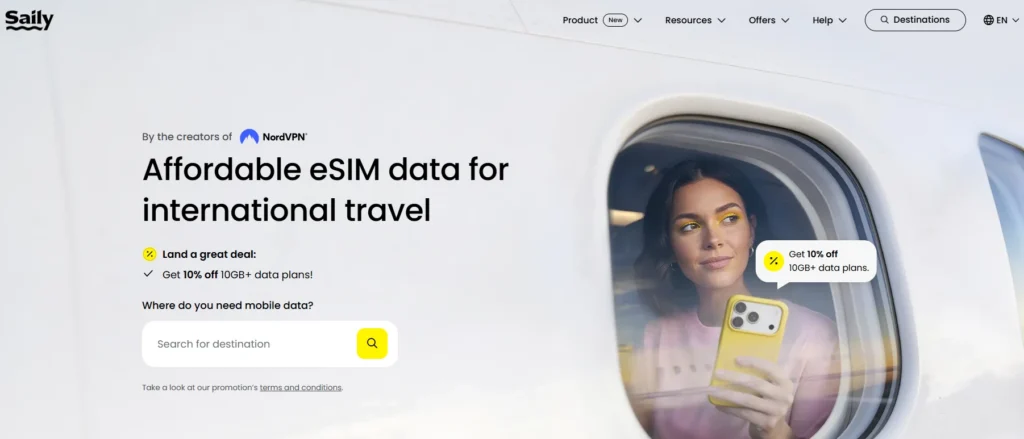
Saily is built by the NordVPN team, and that lineage directly shapes why it stands out as an eSIM for digital nomads who work on open café and coworking networks.
Coverage spans 200+ countries, and beyond standard data connectivity, every plan includes malicious URL blocking, ad blocking, and IP masking. The Ultra plan adds unlimited international data plus 8% cashback in Saily credits for repeat travellers.
A 30-day refund policy is one of the most generous terms in the market. For nomads already paying for a VPN subscription, Saily consolidates both costs.
👉Get Saily for eSIM Digital Nomads
Key Features:
Pros
Cons
Why Saily for Digital Nomads: The NordVPN security layer is the strongest differentiator for nomads handling sensitive client data on public networks. Combining VPN and eSIM in one subscription is a practical cost consolidation.
4. Airalo
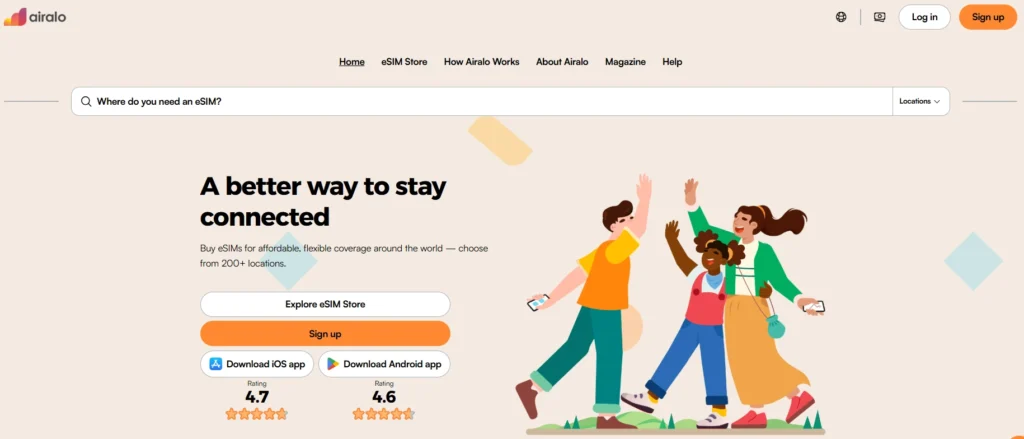
Airalo is the most recognised eSIM for digital nomads who want one app managing all their country profiles without a subscription.
The Discover Global plan covers 190+ countries through local MVNO and carrier partnerships, and the per-country approach means you pay only for the destinations you actually visit.
Plans start around $4.50 for 1GB and scale to multi-GB packages for extended stays. Top-ups mid-plan are available without reinstalling.
The economics work well for light to moderate users. Nomads consuming 25GB or more per month will find the per-GB model expensive against flat-rate regional options.
Key Features:
Pros
Cons
5. MobiMatter
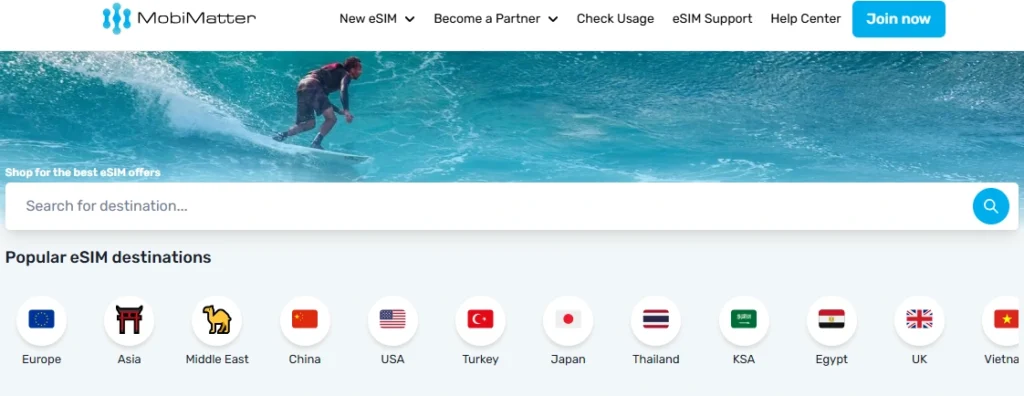
MobiMatter competes as the pricing leader among eSIM for digital nomads platforms in 2026, using a marketplace model that aggregates plans from multiple underlying carriers and surfaces the best rate per destination.
Coverage reaches 200+ countries, and app ratings of 4.7 or above confirm that onboarding works reliably despite the aggregated backend. The trade-off is variability in carrier quality depending on which underlying provider fills your plan.
For budget-first nomads, that variability is an acceptable trade for consistent cost savings.
Key Features:
Pros
Cons
6. Maya
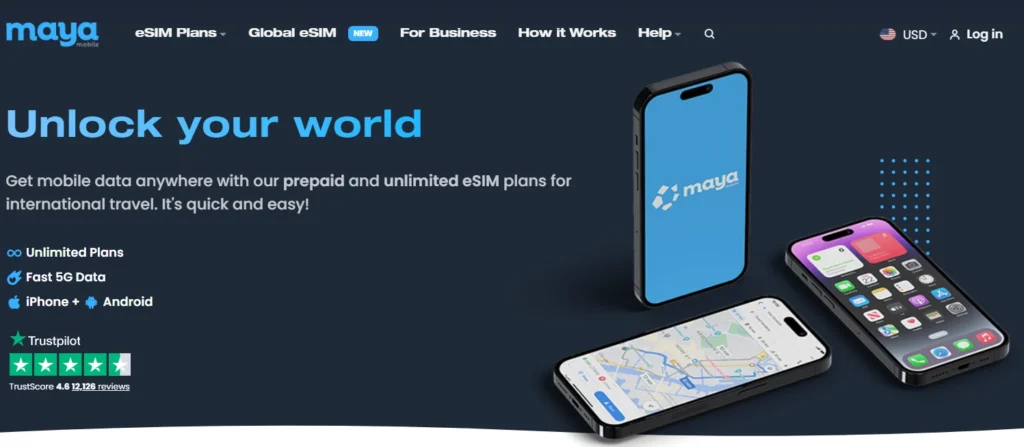
Maya serves the eSIM for digital nomads segment with a regional plan structure suited to nomads doing 30 to 90 day stays in one region rather than rapid multi-continent hopping.
The data-only focus works cleanly alongside a separate voice SIM, a dual-SIM setup most experienced nomads already run. Activation is QR-based with a clean flow, and plan pricing is transparent before purchase.
For a nomad basing in Southeast Asia or the Middle East for a quarter, Maya offers coverage depth that generic global providers sometimes miss at the regional level.
Key Features:
Pros
Cons
7. Lotso Travel
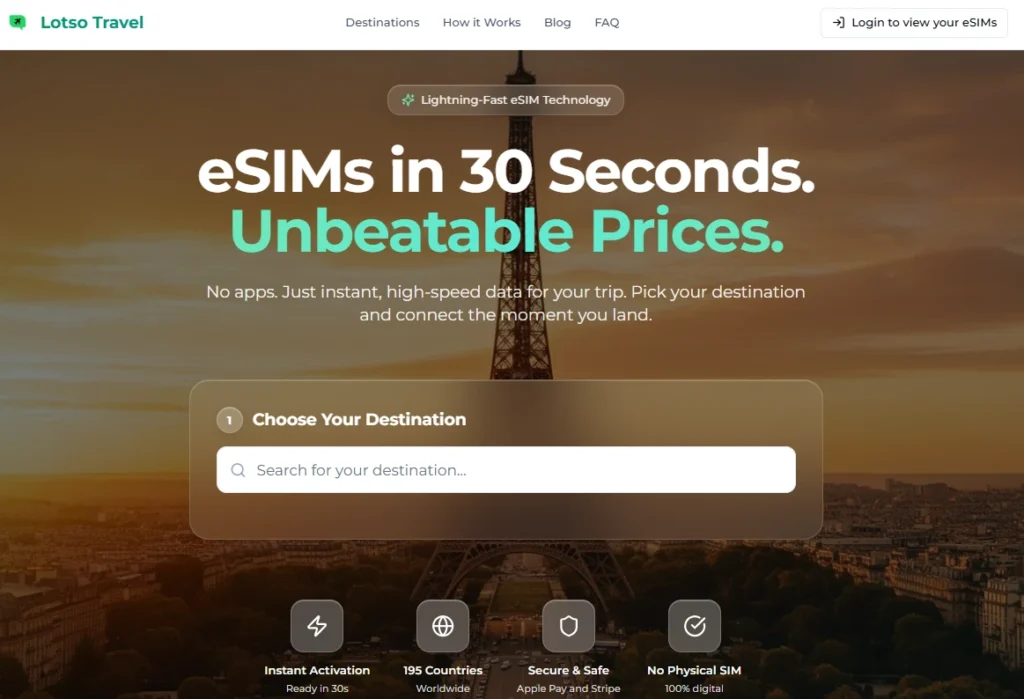
Lotso Travel targets the eSIM for digital nomads audience with a pre-departure activation model and an extended activation window that suits nomads who plan itineraries weeks in advance.
You purchase the plan, install the eSIM profile before you board, and activate when you land. The referral programme rewards nomads who share the service with their travel community.
Coverage is solid across popular nomad corridors, and multiple data tiers cover both light and heavy usage patterns.
Key Features:
Pros
Cons
8. iRoamly
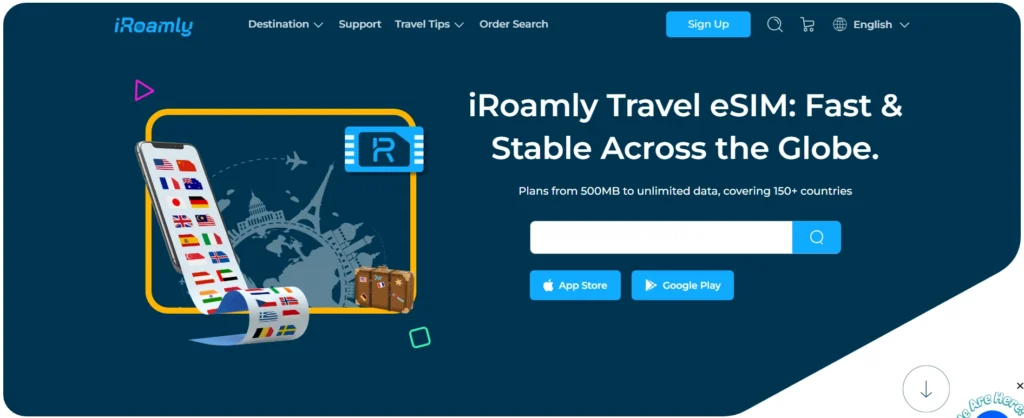
iRoamly structures its eSIM for digital nomads offering around pay-as-you-go top-up mechanics rather than monthly subscriptions.
For nomads who split time between a home base and international stints, a recurring subscription wastes money on the months you are not crossing borders. iRoamly lets you top up when the trip demands it and pause when it does not.
Transparent in-app data usage reporting means no surprise depletion during a critical client deadline.
Key Features:
Pros
Cons
How to Choose the Right eSIM for Digital Nomads
1. Coverage and Network Partners
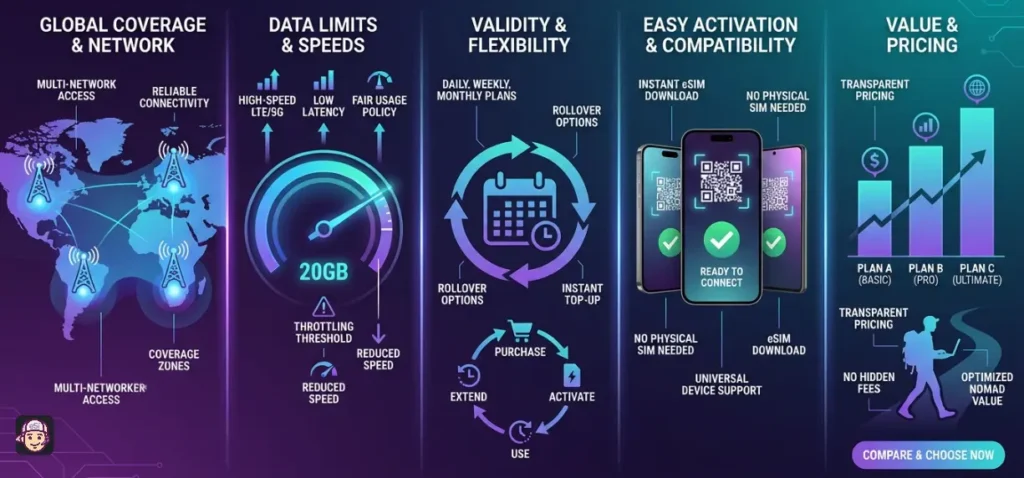
The first question for any eSIM for digital nomads is whether carrier partnerships match your specific travel corridor. Southeast Asia nomads need AIS or True Move strength in Thailand and Telkomsel in Indonesia.
Europe-based nomads need Vodafone or Orange footprint across the continent. Airalo, Saily, and MobiMatter all hit 200+ country coverage, but local carrier agreement quality in your specific destinations matters more than headline numbers.
Always cross-check provider coverage forums for your exact route before purchasing.
2. Data Allowance and Throttling Thresholds
A nomad running Slack, video calls, and cloud uploads burns 10 to 20GB monthly at minimum. Tethering a laptop adds another 5 to 10GB on top.
Gigsky and Saily unlimited plans both throttle around 2GB to 2.5GB per day before speeds drop. For nomads front-loading heavy uploads or running long video calls, that throttle hits quickly.
Per-GB providers like Airalo and iRoamly avoid throttling but charge more at high volumes. Match the plan structure to your actual monthly usage pattern.
3. Plan Validity and Top-Up Options
Short-validity plans are a nomad trap. A 7-day plan expiring mid-project forces a repurchase at the worst possible time. Look for 30-day minimum validity with top-up capability.
Airalo supports top-ups without reinstalling the eSIM profile. Amigo eSIM includes a money-back safety net on failed activations. Gigsky's 12-month post-purchase activation window lets you buy ahead for future destinations.
Choose plans that flex around your schedule, not the other way around.
4. Activation and Device Compatibility
Most iPhones from iPhone 13 onwards and Samsung Galaxy S21 onwards support eSIM natively. The practical nomad challenge is dual SIM management, running a home number on a physical SIM alongside the travel eSIM for data.
Gigsky supports automatic install on newer iOS devices. Airalo's QR code process takes under 3 minutes from purchase to active signal. If auto-configuration fails, manually enter the APN settings provided by your eSIM provider in Mobile Data settings.
5. Price and Value at Nomad Usage Volumes
The cost equation changes completely at nomad data volumes. A $5 plan works for a 3-day tourist. A nomad needing 15GB across 30 days should start with MobiMatter's marketplace rates or Amigo's $25 global plan as cost benchmarks.
Saily's credit cashback on the Ultra plan rewards repeat nomad users. Active coupon codes bring costs down further. ESIMDUDE gives 15% off Gigsky, 12% off Amigo, and 10% off Saily, making them the three strongest value propositions on this list right now.
Frequently Asked Questions About eSIM for Digital Nomads
How do I install an eSIM for digital nomads?
Open your phone Settings, go to Cellular or Mobile Data, and select Add eSIM. Scan the QR code provided by your chosen provider, or use the in-app install flow if supported. Activation takes 2 to 5 minutes. Install before departure so you have data from the moment you land, not after a frustrating airport hunt.
Which eSIM for digital nomads has the best global coverage?
Saily, Airalo, and Mobimatter all cover 200+ countries in 2026 and lead on raw coverage breadth. For nomads wanting a single profile across all destinations without reinstalling, Gigsky's single-eSIM automatic switching removes the most friction. Coverage quality in rural areas depends on local carrier partnerships regardless of headline country counts.
How much does an eSIM for digital nomads cost?
Country-specific plans start at $6, and global plans start around $25 for 128+ country access. Nomads using 15 to 30GB monthly should budget $30 to $50. Coupon codes reduce first costs meaningfully. ESIMDUDE saves 15% on Gigsky, 12% on Amigo, and $50 on eligible Mobimatter plans.
Is an eSIM for digital nomads legal to use?
Yes, eSIMs are legal in virtually all countries for standard data connectivity. A small number of countries restrict VoIP services separately, but eSIM data plans themselves face no general legal barriers. Confirm your phone is carrier-unlocked before purchasing any eSIM plan, as locked devices cannot activate third-party eSIM profiles.
Can I keep my home number while using an eSIM for digital nomads?
Yes. Dual SIM functionality lets you run your home physical SIM for calls and texts while the eSIM handles data. Most iPhones from iPhone 13 onwards and Samsung Galaxy S21 onwards support this natively. Set mobile data to the eSIM and calls to your physical SIM in your phone's cellular settings.
Are there free eSIM options for digital nomads?
Gigsky offers a 100MB free trial for new users, useful for testing activation but insufficient for real work use. No provider offers genuinely free ongoing data for nomad volumes. For reliable work connectivity, paid plans starting at $6 to $25 represent the realistic entry point.

Final Thoughts
For most digital nomads in 2026, Saily and Amigo eSIM cover the widest range of practical needs. Saily handles the security layer that open café networks demand, and Amigo's hotspot-on-all-plans policy removes the most common tethering frustration.
Nomads crossing 10 countries without wanting to touch app settings will find GigSky's single-profile approach worth the slightly higher base price. Test with a short plan first. Saily's 30-day refund and GigSky's free trial both give you room to confirm coverage before committing to a longer plan.
Pick the provider that fits your data habits, not just the one with the biggest country list.
How we test eSIMs
iPhone 15 Pro Max
iPhone 17 Pro Max
Samsung Galaxy S25 ultra
iPad Pro M4
32+ eSIM Providers Tested
150+ Speed Tests Verified
10+ Countries Covered
Why You Can Trust eSIMNinja
We buy every eSIM plan with our own money — no freebies, no sponsored reviews. What you read is what we genuinely experienced.
We keep receipts. Every eSIM is personally purchased.