10 Best eSIM for Southeast Asia 2026 (Tested Plans)


You land at Suvarnabhumi, the humidity hits, and your phone reads “No Service.” The SIM counter has a 40 minute queue, and roaming charges from your home carrier just ticked past $12 for checking one email.
That is the exact frustration a good eSIM for Southeast Asia solves before your plane even touches down. I have activated and tested regional eSIM plans across Thailand, Vietnam, Indonesia, the Philippines, Malaysia, and Singapore over the past year.
The difference between the right provider and the wrong one often comes down to which local carriers they partner with and whether your data actually works once you leave Bangkok or Ho Chi Minh City.
This guide covers the 10 best options for 2026, compared on real coverage, pricing, and network performance across the region.
What Is an eSIM for Southeast Asia and Why Do You Need One?
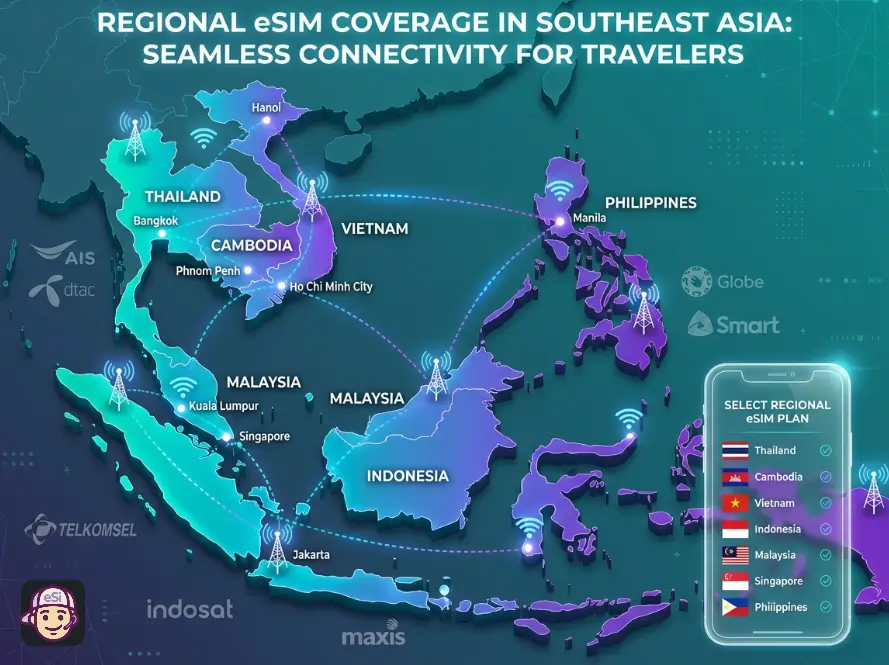
An eSIM for Southeast Asia is a digital SIM profile you install on your phone before or during your trip. It connects you to local carriers like AIS and DTAC in Thailand, Telkomsel and Indosat in Indonesia, Maxis in Malaysia, and Globe or Smart in the Philippines. No physical card. No airport queue. No roaming bill shock.
The installation process takes under five minutes. You purchase a plan online, receive a QR code by email, scan it through your phone settings, and activate mobile data. Your phone runs two profiles simultaneously if it supports dual SIM, so you keep your home number for calls while using the eSIM for data.
For Southeast Asia specifically, regional multi country plans outperform single country eSIMs. Most travellers visit two or three countries per trip. A regional plan lets you cross from Thailand into Cambodia or fly from Singapore to Bali without buying a new eSIM each time.
For eSIM for Southeast Asia, regional plans typically outperform single country options because border crossings are frequent and cheap flights connect destinations daily. Prioritise providers offering tethering and at least 6 country coverage across the ASEAN corridor.
Best eSIM for Southeast Asia 2026 Reviewed
| eSIM Provider | Primary Strength | Ideal User |
|---|---|---|
| Amigo eSIM | Flexible regional data | Budget backpackers |
| Gigsky | Free trial plus cruise coverage | Cruise travellers |
| Saily | 5GB daily high speed cap | Remote workers |
| Airalo | 18 country Asialink plan | Multi country tourists |
| MobiMatter | Marketplace price comparison | Deal hunters |
| Maya | Unlimited 5G data | Heavy data users |
| Lotso Travel | Tiered unlimited daily plans | Long stay visitors |
| Instabridge | 19 country Asia coverage | Island hoppers |
| iRoamly | 147 country global reach | Round the world trippers |
| Billion Connect | 50GB at $0.60 per GB | Value focused travellers |
1. Amigo eSIM
Amigo offers straightforward regional Asia plans starting at $5 for 1GB with 7 day validity. The provider covers all major Southeast Asian destinations including Thailand, Indonesia, Singapore, Malaysia, Vietnam, and the Philippines.
What makes Amigo practical for the region is the absence of complicated pricing tiers. You pick your data, pay, and scan the QR code.
Activation took me under three minutes at a Bangkok hotel. The provider works well for travellers who want a clean pay as you go structure without subscriptions.
👉Get Amigo for Southeast Asia
Pros
Cons
Why Amigo for eSIM for Southeast Asia: The straightforward pricing and regional plan structure fit the typical two week backpacker route through Thailand, Vietnam, and Indonesia. No subscriptions, no app dependency, just data when you need it.
2. GigSky
GigSky covers Asia Pacific from $3.99 and includes a free 100MB trial plan for new users, which is rare in the eSIM world.
The provider stands out for Southeast Asia because it also works on 290 plus cruise ships in Asian waters. If your itinerary mixes land travel with a cruise through Ha Long Bay or the Indonesian archipelago, Gigsky handles both.
The Asia Pacific plan includes Thailand, Vietnam, Indonesia, Singapore, Malaysia, the Philippines, and Cambodia. Larger data options scale to 100GB for 180 days at $161.99.
👉Get GigSky for Southeast Asia
Pros
Cons
Why Gigsky for eSIM for Southeast Asia: The free trial removes the guesswork. Test it at your first destination and commit only when you see it works. The cruise ship coverage makes it the obvious pick for island hopping itineraries around Indonesia and the Philippines.
3. Saily
Saily is backed by NordVPN and delivers a 5GB daily high speed allowance before throttling to 1 Mbps, the highest daily cap among major eSIM for Southeast Asia providers.
The Asia plan covers 19 countries and performed consistently across Bangkok, Singapore, and Kuala Lumpur during my testing. Speeds dipped slightly in smaller towns, but that reflects local infrastructure rather than a Saily problem.
Plans start around $4 for 7 days with longer options stretching to 180 days.
👉Get Saily for Southeast Asia
Pros
Cons
Why Saily for eSIM for Southeast Asia: The 5GB daily cap before throttle matters if you are working remotely from a Canggu coworking space or video calling from a Hanoi cafe. Most competitors throttle at 2 to 3GB daily.
4. Airalo
Airalo runs the Asialink plan covering 18 countries through a mix of local carrier partnerships, and activation takes under five minutes via QR code.
For Southeast Asia, the single profile works across Thailand, Vietnam, Indonesia, Malaysia, Singapore, the Philippines, Cambodia, and Laos.
I used it across three countries and the APN configured automatically each time. The plan starts at $4.50 for 1GB and scales up to larger packages for longer trips.
Pros
Cons
5. MobiMatter
MobiMatter works as a marketplace aggregating plans from multiple eSIM providers, which means you can compare pricing across carriers for the same Southeast Asian destinations in one place.
Vietnam Plus plans start at $9.99 for 10GB covering six countries for 30 days. The Asia 6 Countries plan offers 20GB for $22.99. You get to pick from providers like TSimTech and Sparks based on your specific route and budget. This marketplace model often surfaces the lowest per GB rates.
Pros
Cons
6. Maya
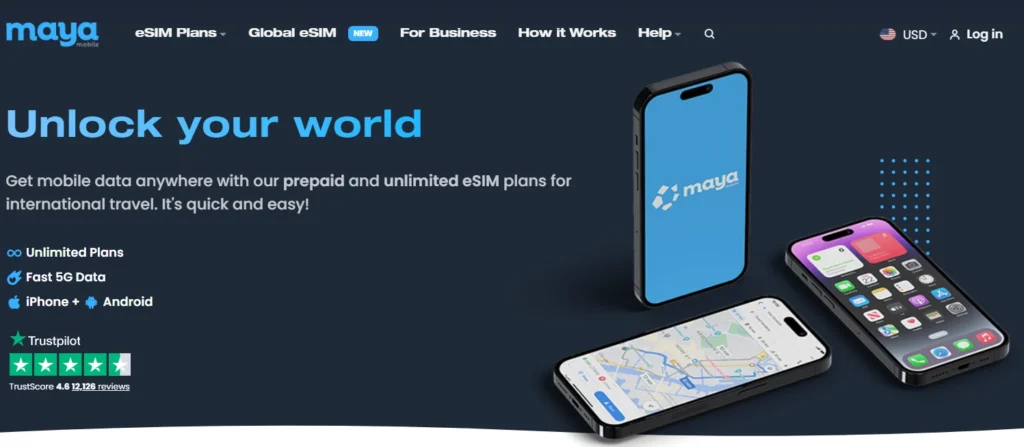
Maya offers unlimited 4G and 5G data across 13 countries through its Asia Plus plan, and WiFi sharing comes included at no extra cost.
The provider covers Indonesia, Malaysia, the Philippines, Singapore, Thailand, Vietnam, plus several East Asian countries. Plans range from 5GB to unlimited, with auto renewal available for 30 day cycles. The 5G access is a genuine differentiator in cities like Singapore and Bangkok where 5G networks are live.
Pros
Cons
7. Lotso Travel
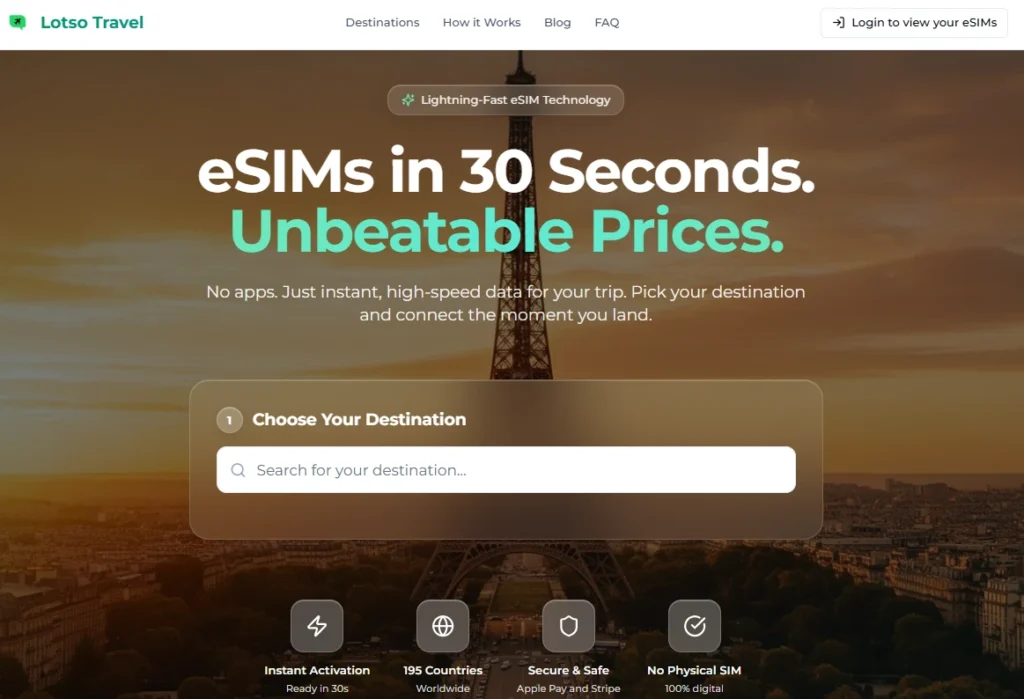
Lotso Travel structures its Asia Plus plans with tiered daily data caps. The Lite tier gives 2GB per day, Standard offers 3GB, and Max provides 5GB, all with unlimited data at 1 Mbps after you hit the cap. Coverage spans 13 countries.
A 5 day Standard plan starts at $15, and the 30 day Max plan sits at $68 with an effective cost of $0.45 per GB. The tiered system lets you match your plan to how much data you actually consume daily.
Pros
Cons
8. Instabridge
Instabridge covers 19 Asian countries through its Asia eSIM plan, including all six core Southeast Asian destinations plus Laos on the global plan.
The 10GB plan valid for 30 days costs $16, making it one of the better value options for a month long trip. A 3GB plan for 15 days at $5.50 suits shorter visits. All plans are data only with fixed caps rather than daily limits.
Pros
Cons
9. iRoamly
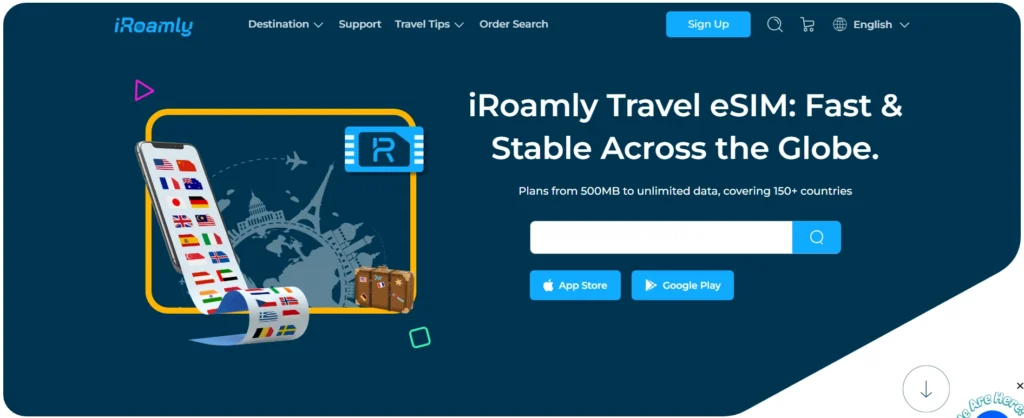
iRoamly takes a global approach covering 147 countries with daily data plans, making it practical if your Southeast Asia trip connects to destinations outside the region.
The daily plan structure means you pay only for the days you use data. Coverage includes major Southeast Asian countries through partnerships with local carriers. If your itinerary runs Bangkok to Tokyo to Sydney, one iRoamly plan handles all three stops.
Pros
Cons
10. Billion Connect

Billion Connect offers one of the strongest value propositions with 50GB for 30 days at $29.99, working out to just $0.60 per GB.
The Asia eSIM plan covers China, Japan, South Korea, Malaysia, Singapore, Thailand, Taiwan, Vietnam, and Macau. Unlimited plans are also available from $2.53 per day up to $46.04 for 30 days with tethering allowed. Fair usage throttling applies on unlimited plans after heavy consumption.
Pros
Cons
How to Pick the Right eSIM for Southeast Asia
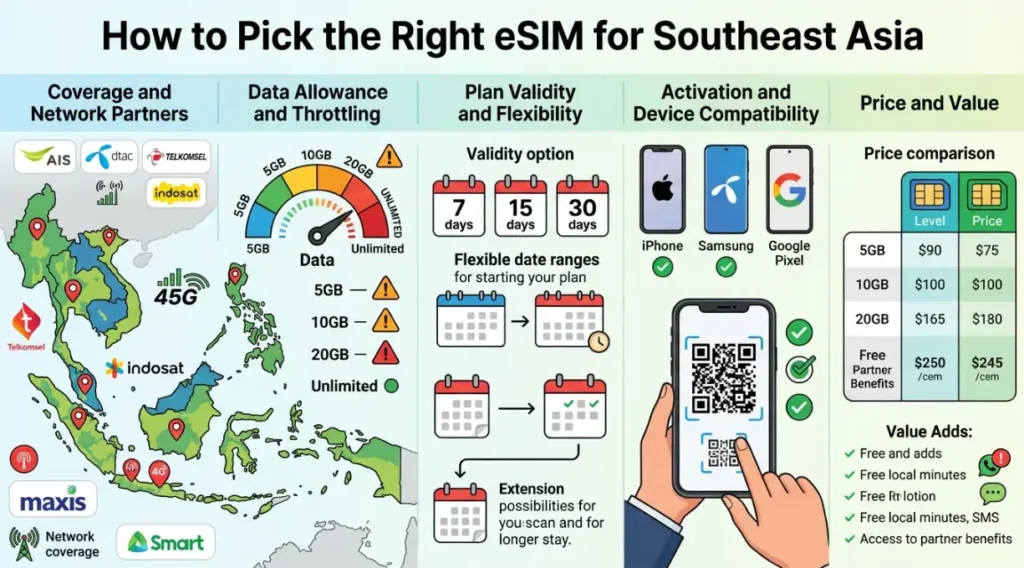
1. Coverage and Network Partners
Southeast Asia connectivity depends on strong local carrier partnerships. Thailand runs on AIS, DTAC, and True Move. Indonesia uses Telkomsel, Indosat, and Three. Malaysia connects through Maxis, Digi, and Celcom. Singapore uses Singtel, StarHub, and M1.
Check which local carriers your eSIM provider partners with. Providers routing through Singtel or AIS tend to deliver the most reliable LTE across the region. Choose a provider that names its carrier partners rather than hiding behind vague language about local networks.
2. Data Allowance and Throttling
A two week backpacker hitting temples in Bali, beaches in Phuket, and street food in Hanoi typically burns 8 to 12GB on maps, translations, and photo uploads. Remote workers on video calls need 3 to 5GB daily. Match your plan to your actual consumption.
Tiered plans like Lotsotravel or Saily with daily caps and fallback speeds prevent total cutoff. Fixed cap plans from Instabridge or Airalo work for disciplined data users. Understand whether throttling is daily or total before buying.
3. Plan Validity and Flexibility
Short trip tourists need 7 day plans. Month long slow travellers need 30 day options. Digital nomads rotating through the region need auto renewal or stackable plans.
Check if your plan starts on purchase or on first activation. Most eSIM for Southeast Asia plans activate on first data use, giving you flexibility to install before departure and activate on landing. Plans with delayed activation save you from wasting validity days in transit.
4. Activation and Device Compatibility
Most modern iPhones from XS onward and Samsung Galaxy models from S20 onward support eSIM. Check your device compatibility before purchasing. The activation process involves scanning a QR code through your phone settings.
Some providers like Airalo and Saily offer dedicated apps for managing multiple profiles. Dual SIM functionality lets you keep your home number active for incoming calls while using the eSIM for Southeast Asia data. Install your eSIM on hotel WiFi before leaving home to avoid activation issues on arrival.
5. Price and Value
Per GB plans from MobiMatter or Billion Connect suit light users who check maps and send messages. The $0.56 to $0.60 per GB range represents strong value for the region.
Unlimited plans from Maya or Lotso Travel make sense for heavy users streaming or working remotely. Daily capped plans from Saily split the difference. Calculate your expected daily usage and multiply by trip length before comparing headline prices.
Frequently Asked Questions About eSIM for Southeast Asia
How do I install an eSIM for Southeast Asia on my phone?
Purchase a plan from your chosen provider. You receive a QR code by email. Go to your phone settings, select “Add eSIM” or “Add Cellular Plan,” and scan the code. Follow the prompts to activate. The entire process takes under five minutes on both iPhone and Android devices.
Which eSIM for Southeast Asia has the best coverage?
Airalo and Instabridge offer the widest Southeast Asian coverage at 18 and 19 countries respectively. For pure network quality in major cities, providers partnering with AIS in Thailand, Telkomsel in Indonesia, and Singtel in Singapore deliver the most reliable speeds.
How much does an eSIM for Southeast Asia cost?
Prices range from $3.49 for basic plans on Mobimatter to $68 for premium 30 day unlimited plans on Lotsotravel. A typical 10GB plan for 30 days costs between $16 and $26 depending on the provider. BillionConnect offers 50GB for $29.99, one of the best rates in the market.
Are eSIMs for Southeast Asia legal to use?
Yes. eSIMs are fully legal across all Southeast Asian countries. Your phone must be carrier unlocked to use an eSIM from a third party provider. Most phones purchased outright or fully paid off through a carrier are unlocked. Check with your home carrier if unsure.
Can I use an eSIM for Southeast Asia and keep my home number?
Yes. Modern phones with dual SIM support let you run your home SIM for calls and texts alongside an eSIM for data. This means you receive calls on your home number while using affordable local data through your eSIM for Southeast Asia.
Can I use a free eSIM for Southeast Asia?
Gigsky offers a free 100MB trial plan that works across Asia Pacific. This is enough to test activation and grab a ride from the airport but not enough for a full trip. For reliable multi day coverage, a paid plan starting from $3.49 to $5 is the practical minimum.

Final Thoughts
The right eSIM for Southeast Asia depends on how you travel. Billion Connect delivers raw value at $0.60 per GB for budget travellers who watch their usage.
Saily and Maya handle heavy data demands with daily caps and unlimited plans that keep remote workers connected across the region. GigSky earns its spot for anyone mixing land travel with cruises, and the free trial removes the risk of trying something new.
Most of these providers offer money back guarantees or free trials, so testing before a major trip costs you nothing. Pick the plan that matches your route, install it before you leave home, and save the airport WiFi hunt for someone else.
How we test eSIMs
iPhone 15 Pro Max
iPhone 17 Pro Max
Samsung Galaxy S25 ultra
iPad Pro M4
32+ eSIM Providers Tested
150+ Speed Tests Verified
10+ Countries Covered
Why You Can Trust eSIMNinja
We buy every eSIM plan with our own money — no freebies, no sponsored reviews. What you read is what we genuinely experienced.
We keep receipts. Every eSIM is personally purchased.