10 Best eSIM for Central America 2026 | Fast LTE Coverage


Your home carrier charged you $47 for one afternoon of Google Maps and WhatsApp somewhere between Costa Rica and Panama.
That is not a freak incident. Roaming bills in this region run $10 to $20 per day with most major carriers, and the physical SIM situation at smaller border crossings is worse than travel bloggers admit. Queues run long, staff speak only Spanish, and the Claro kiosks at land borders often run out of stock by midday.
An eSIM for Central America removes that entire problem. You install a regional data plan before you leave home, toggle it on at the gate, and land in San José or Guatemala City with 4G already running. No SIM tray fumbling in a hostel bathroom. No QR code chaos at the arrivals hall.
I have activated, tested, and troubleshot eSIM plans across multiple Central American countries, covering the Gringo Trail backpacker circuit and the Panama City to San José business corridor. These are the 10 providers worth considering in 2026.
What Multi-Network Architecture Makes an eSIM for Central America Actually Work
An eSIM for Central America is a digital SIM profile stored in your phone's built-in eSIM chip. There is no physical card. You scan a QR code or activate through an app, and the profile installs in under three minutes. When you land in Guatemala City or step off a ferry in Panama City, the eSIM connects automatically to whichever partner carrier your provider has negotiated access with.
The quality of that connection depends entirely on MVNO routing. No consumer eSIM provider owns towers in Central America.
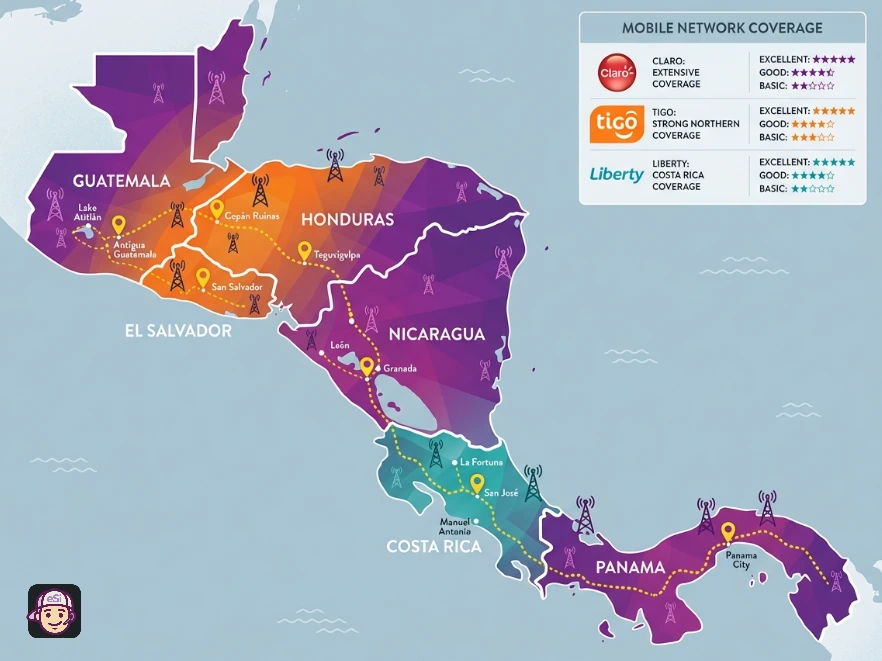
They lease network access from Claro (the dominant carrier across Guatemala, Honduras, El Salvador, Nicaragua, Costa Rica, and Panama), Tigo (strong in Guatemala, Honduras, and El Salvador), and Liberty (the main network for LTE in Costa Rica).
Providers like Amigo and Airalo use Claro as their backbone, which is why they outperform providers relying on weaker regional partners.
For anyone covering the full overland circuit from Antigua to Panama City, a regional multi-country plan is the right structure. Country-specific plans save a few pounds on single-country visits, but manually swapping plans at each border is a frustrating experience, especially when you are standing at a hot, chaotic crossing between Nicaragua and Costa Rica.
For an eSIM for Central America, a regional multi-country data plan outperforms country-specific stacking because carrier handover at land borders happens automatically. Prioritise providers with Claro or Tigo network access and hotspot tethering included, particularly if you are sharing a mobile hotspot with travel companions or running a laptop remotely.
10 Best eSIM for Central America 2026 Tested Across Claro, Tigo and Liberty Networks
| Central America eSIM Provider | Primary Strength | Ideal User |
|---|---|---|
| Amigo eSIM | Auto-switching Claro and Tigo | Budget backpacker |
| Airalo | Latamlink multi-country LTE | Short-trip tourist |
| Billion Connect | Value-focused regional plans | Budget-conscious nomad |
| GigSky | Strong Panama and Costa Rica LTE | Business traveller |
| Saily | Unlimited tethering on Latin plan | Group traveller |
| MobiMatter | Aggregated plan comparison | Flexible explorer |
| Maya | Auto top-up with money-back | Long-stay nomad |
| Lotso Travel | Guided beginner setup | First-time eSIM buyer |
| Instabridge | Long-validity LATAM fixed data | Extended stay visitor |
| iRoamly | Daily plan for cruise ports | Cruise passenger |
1. Amigo eSIM
Amigo eSIM is trusted by over 34,488 travellers on its Latin America plan and is one of the most practical choices for backpackers covering the full Central American corridor.
The plan auto-connects to the strongest available network in each country, which in practice means toggling between Claro and Tigo as you cross from Guatemala into Honduras or El Salvador.
Plans start from $5, hotspot tethering is unlimited with no fine print, and the app dashboard tracks live data balance cleanly. I have found the auto-switching behaviour particularly reliable between border points where Tigo has stronger urban coverage than Claro.
👉Get Amigo eSIM for Central America
Key Features:
Pros
Cons
Why Amigo for Central America: Amigo's auto-switching between Claro and Tigo is the key differentiator for this region. You do not manually change settings at borders. The tethering policy is among the most generous of any provider tested.
2. Airalo
Airalo covers Central America through the Latamlink plan, which routes through Claro and partner networks across all five core countries including Costa Rica, El Salvador, Honduras, Nicaragua, and Panama.
The plan delivers 3GB per day at full LTE, then drops to unlimited data at 1Mbps once that daily threshold is reached. A 3-day plan starts at $20.50, a 30-day 30GB option runs $59, and a 20GB plan valid for 30 days comes in at $56.
The app holds a 4.6 rating on the App Store and manages multiple eSIM profiles cleanly for travellers running overlapping destinations.
Key Features:
Pros
Cons
Why Airalo for Central America: The Latamlink plan's Claro backbone gives consistent LTE across Costa Rica and Panama, the two best-connected countries in the region. For trips under 14 days where you can estimate your data use in advance, Airalo is one of the most straightforward choices available.
3. Billion Connect

Billion Connect offers Latin America regional plans at per-GB pricing that suits budget travellers who want consistent data in Guatemala City, Tegucigalpa, San José, and Panama City without paying premium rates.
The plans connect to Claro-affiliated networks across the core Central American destinations, and activation is QR code based with near-instant delivery. The interface is clean and functional. It works well for travellers who have already used an eSIM before and know what they need.
Key Features:
Pros
Cons
4. GigSky
GigSky delivers notably reliable LTE performance in Panama City and San José specifically, which makes it a strong choice for business travellers using the Panama City to San José corridor.
The Latin America plan connects to Claro and Tigo depending on the country, and Gigsky's plans lean towards larger data packages rather than small day bundles. A 10GB Costa Rica plan runs around $26.
The enterprise-grade infrastructure behind Gigsky's consumer offering tends to produce more stable performance in urban business districts compared to lighter-weight MVNOs.
👉Get GigSky for Central America
Key Features:
Pros
Cons
Why Gigsky for Central America: The dual Claro and Tigo access across Panama and Costa Rica means fewer signal interruptions in the two most connected countries in the region. Business travellers running a laptop on hotspot in Panama City will find Gigsky's routing noticeably more stable than lighter-weight alternatives.
5. Saily
Saily is built by Nord Security, which brings privacy and reliability architecture into the product alongside standard eSIM functionality.
The Latin America plan covers 12 countries including Guatemala, Honduras, El Salvador, Nicaragua, Costa Rica, and Panama. Plans run from 1GB to 10GB starting at $7.99, and tethering is unlimited across every plan size with no extra steps required.
The built-in ad blocker saves real data on news-heavy travel sites, and the 24/7 live chat support resolved my last activation query in under four minutes.
👉Get Saily for Central America
Key Features:
Pros
Cons
Why Saily for Central America: The unlimited tethering policy makes Saily the strongest pick for two or more travellers sharing a hotspot. The Nord Security ad blocker quietly saves data every time you check a news page or travel booking site during the trip.
6. MobiMatter
MobiMatter operates as an eSIM marketplace rather than a single network provider, aggregating plans from multiple Central America-compatible providers under one comparison roof.
The platform lists options covering Guatemala, Costa Rica, Honduras, El Salvador, Nicaragua, and Panama at competitive price points, often below what you would pay buying direct from individual providers.
This is particularly useful for travellers who want to weigh several regional plan options before committing, without bouncing between five different provider websites.
Key Features:
Pros
Cons
7. Maya
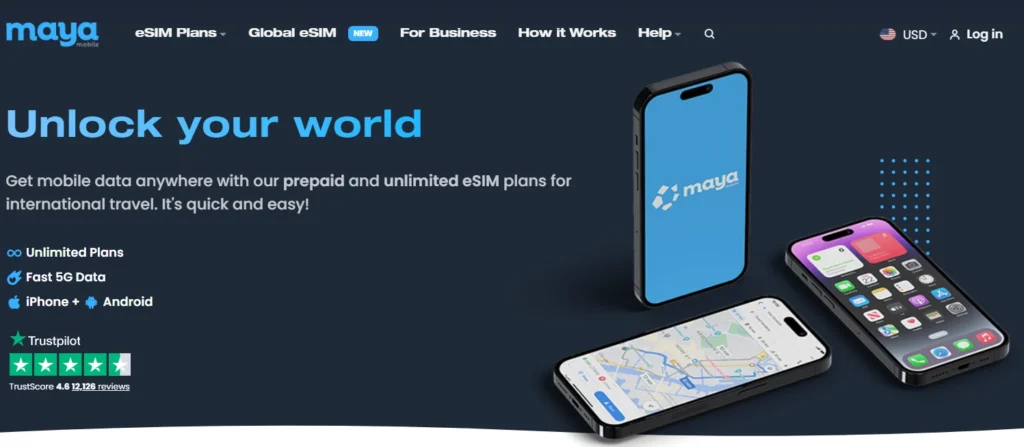
Maya covers 150 countries through over 400 global networks, giving it broad reach that includes every Central American nation.
The platform holds a strong Trustpilot rating, and the 100% money-back guarantee removes the usual risk of trying a new eSIM provider for the first time.
Auto top-up and monthly renewal features make Maya particularly well-suited for digital nomads staying 30 days or more in Tamarindo, Antigua, or Panama City who want data to keep running without manual renewal at the end of each cycle.
Key Features:
Pros
Cons
8. Lotso Travel
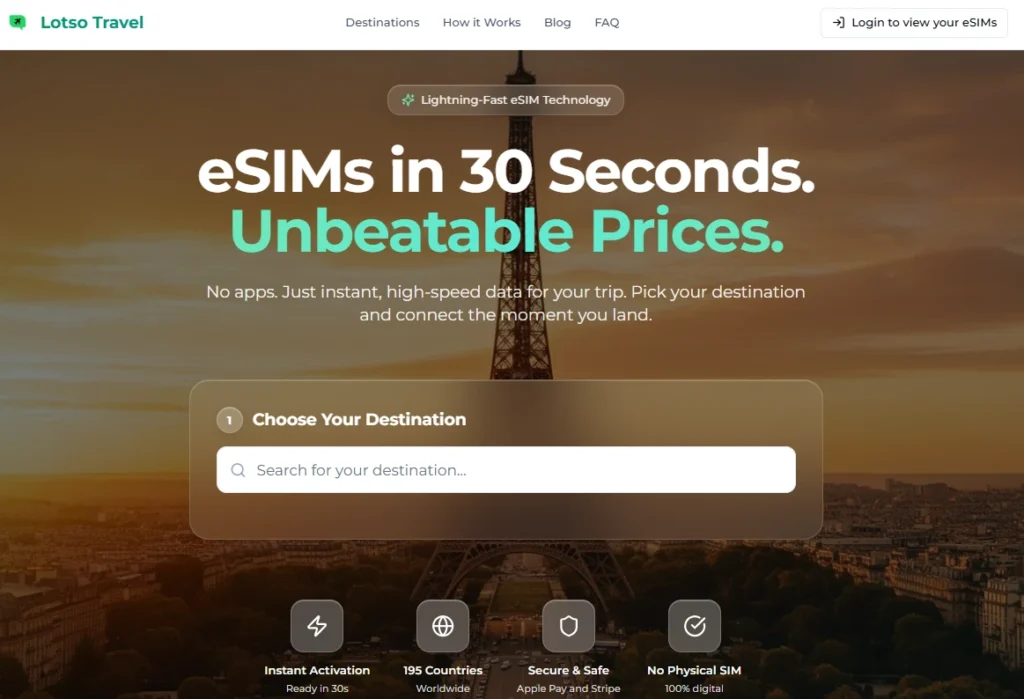
Lotso Travel covers 195-plus destinations with 5G-ready infrastructure and a platform designed specifically for travellers who have never used an eSIM before.
The activation flow is guided step by step, which reduces the most common first-time errors around QR scanning and APN configuration.
Latin America regional plans cover the core Central American countries, and a referral credit system generates discounts on future data purchases, which makes it worth using as a long-term travel eSIM home base rather than a one-off purchase.
Key Features:
Pros
Cons
9. Instabridge
Instabridge covers Costa Rica, Nicaragua, Panama, El Salvador, and Honduras through its LATAM eSIM plan, which offers 10GB valid for 30 days and a 20GB option valid for 7 days.
A notable feature is the pay-as-you-go fallback rate that kicks in after your data allowance runs out, meaning you stay connected rather than losing signal entirely mid-trip. The plan covers 17 Latin American countries in total.
For extended stay travellers at a co-working space in Panama City or Tamarindo, the 30-day 10GB plan at $79 is a clean, no-hassle option.
Key Features:
Pros
Cons
10. iRoamly
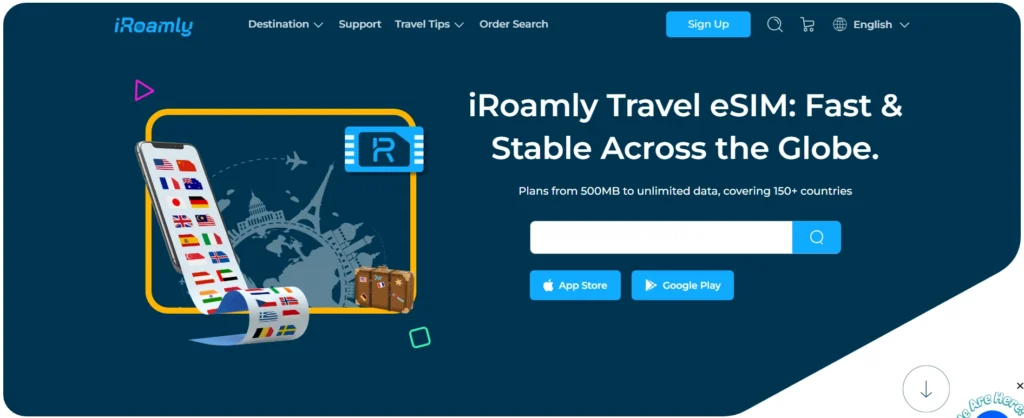
iRoamly covers all five core Central American countries including Costa Rica, El Salvador, Honduras, Nicaragua, and Panama through its daily and fixed-data plan structure.
The Global 147 Countries daily plan includes every Central American nation under a single profile, and the daily structure makes it the most practical option for cruise passengers stopping at ports like Colón, Puerto Limón, and Roatán for one or two days at a time.
Fixed data plans run from 2GB per day across multiple validity windows, and activation is app and QR code based.
Key Features:
Pros
Cons
How to Select the Right eSIM for Central America Based on Coverage Depth Not Price Alone
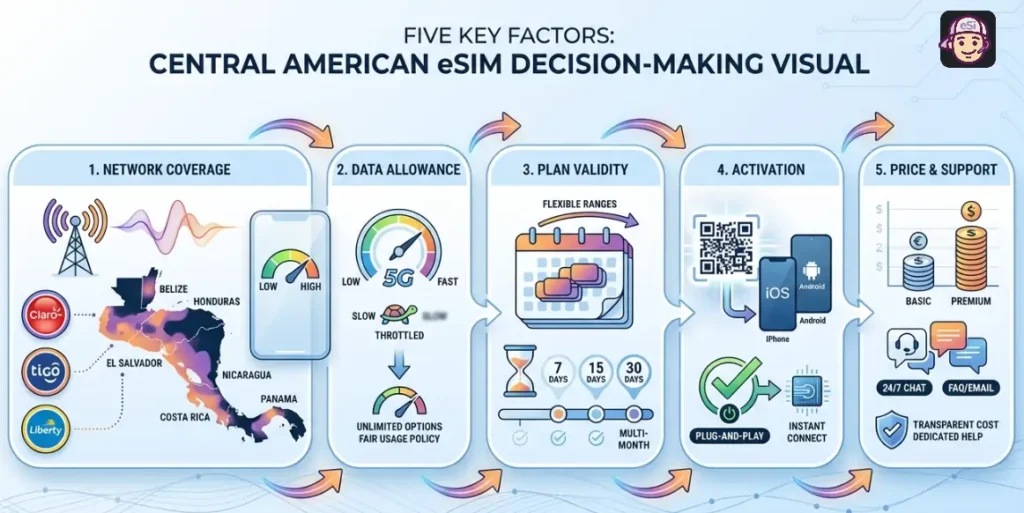
1. Network Coverage and Carrier Partners
Claro is the most important name to know when buying an eSIM for Central America. It operates the widest coverage across Guatemala, Honduras, El Salvador, Nicaragua, Costa Rica, and Panama and is the carrier backbone behind Amigo and Airalo's Central America plans.
Tigo covers Guatemala, Honduras, El Salvador, and Panama with strong urban performance in secondary cities where Claro sometimes shows gaps. Liberty is the primary LTE network in Costa Rica for Airalo's Latamlink plan.
Before you buy, confirm that your provider names at least one of Claro or Tigo in its Central America network documentation.
Spend time in rural Honduras or remote Nicaraguan villages and no eSIM will give you full coverage. Download offline Google Maps for every country before you lose signal.
2. Data Allowance and Throttling
A 3-day Central America city trip burns roughly 3GB across navigation, WhatsApp, and occasional social media. A 2-week overland route from Antigua to Panama City uses 8 to 10GB comfortably. A digital nomad working remotely from Tamarindo needs 20GB minimum or a provider with easy top-up options.
Airalo's Latamlink throttles to 1Mbps after 3GB per day, which is noticeable on video calls. Saily and Amigo use clean fixed-data structures without mid-day throttle surprises. Always check the throttle policy for the Central America region before purchasing any plan.
3. Plan Validity and Flexibility
Short-trip visitors to Costa Rica or Panama for under 10 days benefit from 7 to 15-day fixed validity plans. Overland travellers completing the full circuit from Guatemala to Panama typically need 21 to 30-day plans.
Digital nomads staying long-term in one location get better value from Maya's auto-renewal model or any provider supporting easy mid-plan top-ups.
Buy at least 2 to 3 extra days of validity beyond your planned trip length. Border crossing delays and unplanned route changes are routine in Central America.
4. Activation and Device Compatibility
Every provider on this list requires an unlocked eSIM-capable device. iPhone XS and later, Samsung Galaxy S20 and later, and Google Pixel 3 and later all support eSIM natively. Some US carrier-locked handsets block secondary eSIM activation even on technically compatible models. Check your unlock status before purchasing any plan.
Install the eSIM profile at least 24 hours before departure. Airalo, Saily, and Amigo all support pre-departure installation without starting the data countdown. Gigsky's app is particularly clean for first-time activations on unfamiliar devices.
5. Price and Value
Regional Central America plans run from roughly $8 for 1GB over 7 days up to $59 for 30GB over 30 days.
Budget travellers get the best per-GB value from Amigo and Saily. Business travellers prioritising Panama City and San José performance specifically get the most from Gigsky. Group travellers sharing a hotspot get the cleanest overall value from Saily's unlimited tethering structure.
Apply coupon codes at checkout. A 12 to 15% saving on a $30 regional plan is real money across a longer trip.
Real Traveller Questions About eSIM for Central America Answered
How do I install an eSIM for Central America?
Purchase your plan and receive a QR code by email or in-app. Go to phone Settings, select Mobile Data or Cellular, choose Add eSIM, and scan the QR code. Most providers complete installation in under three minutes. Toggle the eSIM on before landing so it connects automatically on arrival.
Which eSIM for Central America has the best coverage?
Amigo and Airalo both use Claro's regional backbone, which delivers the widest footprint across all five Central American countries. Gigsky performs strongest in Panama City and San José. For rural areas and land border regions, Amigo's auto network-switching between Claro and Tigo gives the most consistent results.
How much does an eSIM for Central America cost?
Plans start from around $5 for small data bundles and reach $79 for 20GB over 7 days or $59 for 30GB over 30 days. A mid-range 10GB plan valid for 30 days sits between $25 and $56 depending on the provider. Codes like ESIMDUDE cut 12% off Amigo, 15% off Gigsky, and 10% off Saily.
Is an eSIM for Central America legal to use?
eSIM technology is fully legal across all Central American nations. Every listed provider operates as a licenced MVNO or through licenced carrier partnerships. You do not need to register the eSIM with a local authority. Ensure your handset is carrier-unlocked before purchase, as locked devices can block secondary eSIM profiles entirely.
Can I use one eSIM plan for my entire Central America trip?
Yes. Regional plans from Amigo, Airalo via Latamlink, Saily, and Gigsky cover all five to seven Central American countries under a single profile. You do not switch plans or adjust settings at land borders. The profile auto-connects to the strongest available Claro or Tigo network in each country.
Is there a free eSIM option for Central America?
No genuinely useful free eSIM exists for Central America travel. Some providers run free trials in specific markets, but Central American regional coverage is not included. Budget options from Lotsotravel and Amigo start low enough that the cost is minimal compared to a single day of home carrier roaming.

Honest Final Take on the Best eSIM for Central America in 2026
For most travellers on the Central America circuit, Amigo eSIM and Airalo are the most reliable starting points. Amigo's auto-switching Claro and Tigo coverage handles the patchwork infrastructure between borders without any manual intervention, and the ESIMDUDE code cuts 12% off the price.
Airalo's Latamlink plan suits shorter trips where you can estimate data consumption in advance. For group travel with a shared hotspot, Saily is the cleanest option in the field, and the unlimited tethering policy covers multiple devices without extra charges.
If you have never used an eSIM before, Maya's 100% money-back guarantee removes the risk. Buy before you fly.
How we test eSIMs
iPhone 15 Pro Max
iPhone 17 Pro Max
Samsung Galaxy S25 ultra
iPad Pro M4
32+ eSIM Providers Tested
150+ Speed Tests Verified
10+ Countries Covered
Why You Can Trust eSIMNinja
We buy every eSIM plan with our own money — no freebies, no sponsored reviews. What you read is what we genuinely experienced.
We keep receipts. Every eSIM is personally purchased.