8 Best eSIM for Journalists 2026 | Secure Field Data


A correspondent lands in Tbilisi to cover a protest. The hotel Wi-Fi is monitored. The local SIM requires passport registration. A source is waiting.
Without a secure, independent data line, that journalist cannot file the story, protect the source, or even access a blocked news platform. An eSIM for Journalists provides encrypted, private mobile data that activates before the plane touches down, with no local ID requirements and no paper trail at a telecom counter.
The 2026 European Press Freedom Report documented 1,481 press freedom violations across 36 countries in 2025 alone, with digital surveillance and communication interception ranking among the top threats.
Meanwhile, eSIM connections are forecast to reach 1.5 billion globally in 2026 according to Juniper Research. The IFRC's 2026 World Disasters Report specifically highlighted eSIM cards as emergency connectivity solutions for field workers and press operating in crisis zones.
These 8 providers were evaluated through that specific lens. Not tourist convenience. Journalistic operational security.
Why Standard Travel Plans Fail as an eSIM for Journalists in the Field
A tourist eSIM keeps Instagram running. An eSIM for journalists must sustain encrypted file transfers, live video feeds to newsrooms, secure source communications through Signal or ProtonMail, and real-time research in environments where digital surveillance is active. The requirements are operationally different.
Reporters Without Borders recommends that journalists install a VPN to encrypt all internet connections while reporting abroad. In at least 21 countries surveyed by Freedom House, anti-censorship tools including VPNs have been blocked in the past five years.
That means an eSIM for journalists in those environments needs either native encryption built into the plan, or enough bandwidth to run a VPN overlay without the connection collapsing.
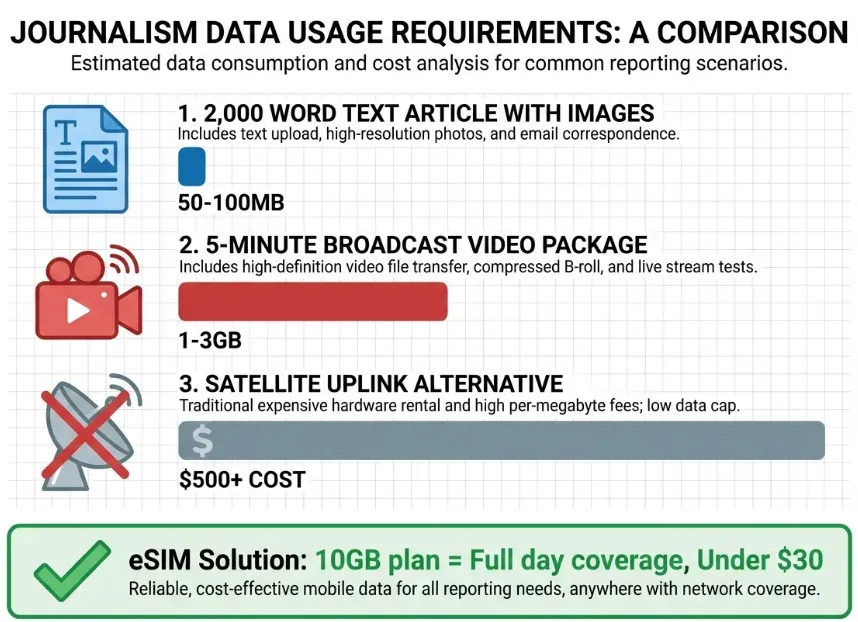
Data volumes matter. Filing a 2,000 word text story with embedded images uses roughly 50 to 100MB. A 5 minute video package at broadcast quality uses 1 to 3GB. A one hour live satellite uplink alternative costs $500 or more. An eSIM with 10GB and strong upload speeds handles a full reporting day for under $30.
For eSIM for journalists, unlimited or high cap global plans with native encryption or VPN compatibility outperform small per-GB tourist plans because a single video file can burn through a budget data cap. Prioritise providers that do not require local ID registration and that offer IP masking or VPN integration.
8 Best eSIM for Journalists 2026 Field Rated
| eSIM for Journalists | Journalism Edge | Reporter Profile |
|---|---|---|
| Saily | Native end to end encryption | Investigative correspondents |
| Airalo | Instant multi-region profiles | Breaking news chasers |
| Billion Connect | Separate hotspot, no phone drain | Photojournalists in the field |
| Amigo eSIM | Tethering on all plans | Laptop filing reporters |
| GigSky | MVNO auto border switching | Conflict zone border crossers |
| MobiMatter | Lowest per-GB field cost | Freelance stringers |
| Maya | Deep regional signal depth | Long-form bureau reporters |
| iRoamly | Unlimited data, no subscription | Intermittent assignment reporters |
1. Saily
Saily was built by the NordVPN team, and that origin makes it the most relevant eSIM for journalists operating in countries where digital surveillance and platform censorship are active threats.
Every plan includes IP masking, ad blocking, and malicious URL filtering. In countries like Turkey, Russia, and parts of Southeast Asia where VPN access itself is restricted, Saily's encrypted tunnel is built into the eSIM connection rather than layered on top.
Coverage spans 200+ countries. The Ultra plan delivers unlimited data with 8% credit cashback for reporters who file from multiple assignments per year. The 30 day refund gives correspondents a risk-free window to test signal strength at their bureau or field location.
Field Ops Specs:
Field Advantages
Field Limitations
Why Saily for Journalists: RSF recommends VPN encryption for all journalists working abroad. Saily integrates that encryption natively. In countries where standalone VPN apps are blocked or detectable, Saily's built-in tunnel provides a layer of protection that a separate app cannot.
2. Airalo
Airalo lets journalists pre-install eSIM profiles for multiple assignment destinations from one app before leaving the bureau.
For an eSIM for journalists perspective, that means a reporter assigned to cover a story unfolding across Lebanon, Jordan, and Turkey can have all three country profiles ready before boarding the first flight. Data is live from touchdown.
The 190+ country reach covers virtually every reporting destination. Plans start at $4.50 for 1GB, and top-ups add data mid-assignment without reinstalling the profile. That prevents the worst possible field scenario. Running out of data during a filing deadline.
Field Ops Specs:
Field Advantages
Field Limitations
Why Airalo for Journalists: The pre-install system matches the assignment workflow perfectly. An editor sends you to three countries in two weeks. You load all three profiles from the departure lounge. Data is live at each destination before you reach the press centre.
3. Billion Connect
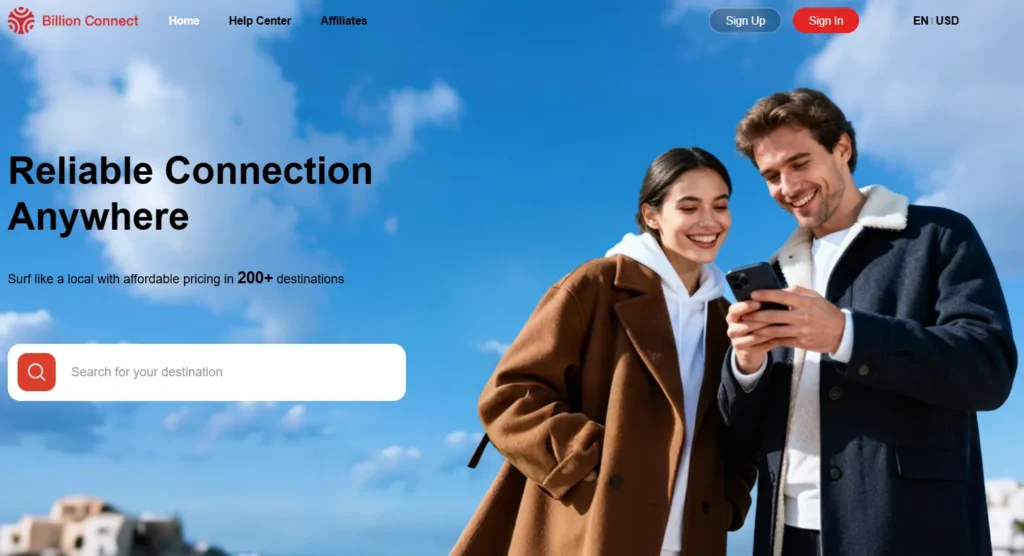
Billion Connect offers pocket Wi-Fi devices alongside standard eSIM plans, and that hardware option solves a genuine problem for the eSIM for journalists working extended field days.
A photojournalist covering a 12 hour event cannot afford to drain phone battery running a hotspot for laptop filing. Billion Connect's portable unit creates a separate network. The phone stays charged for camera tethering, source calls, and GPS.
The pocket device handles data for the laptop, sat phone sync, or backup device from a bag or vest pocket. It supports 5 to 10 simultaneous connections.
Field Ops Specs:
Field Advantages
Field Limitations
Why BillionConnect for Journalists: Phone confiscation is a documented press freedom violation in multiple countries. A separate pocket Wi-Fi means losing the phone does not mean losing all connectivity. The backup device can still file a story.
4. Amigo eSIM
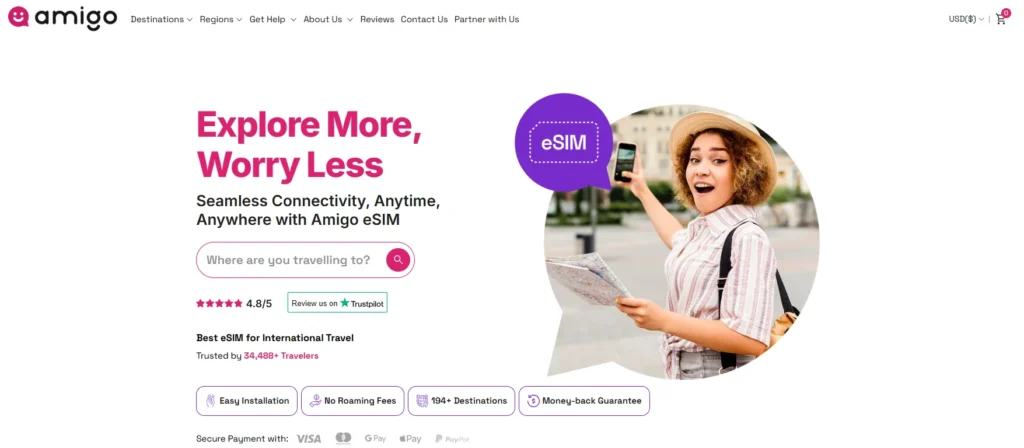
Amigo eSIM enables hotspot tethering on every plan tier including the $6 entry level, and for an eSIM for journalists who files long-form pieces from a laptop tethered to a phone connection in a press centre or hotel room, that unrestricted tethering is the deciding feature.
Coverage reaches 128 countries. The money-back guarantee reduces risk when activating in an unfamiliar destination. For freelance stringers covering a single-country story, the $6 plan with full tethering handles a 3 to 5 day text and photo filing assignment without overspending.
👉Get Amigo eSIM for Press Filings
Field Ops Specs:
Field Advantages
Field Limitations
5. GigSky
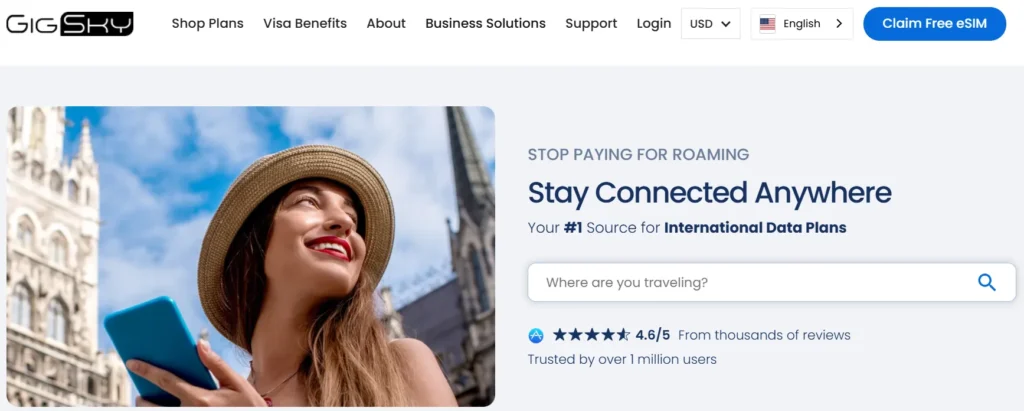
Gigsky functions as a full MVNO and automatically transitions between carrier networks at border crossings, which directly serves the eSIM for journalists covering stories that span multiple countries in rapid succession.
A correspondent following a refugee route across Greece, North Macedonia, and Serbia does not stop to reconfigure phone settings at each border.
GigSky's single profile handles the switching silently. The free 100MB trial tests activation before committing critical field data to the plan.
Daily throttle around 2.5GB suits text and photo filings but limits heavy video dispatch days.
👉Get GigSky for Cross-Border Reporting
Field Ops Specs:
Field Advantages
Field Limitations
6. MobiMatter
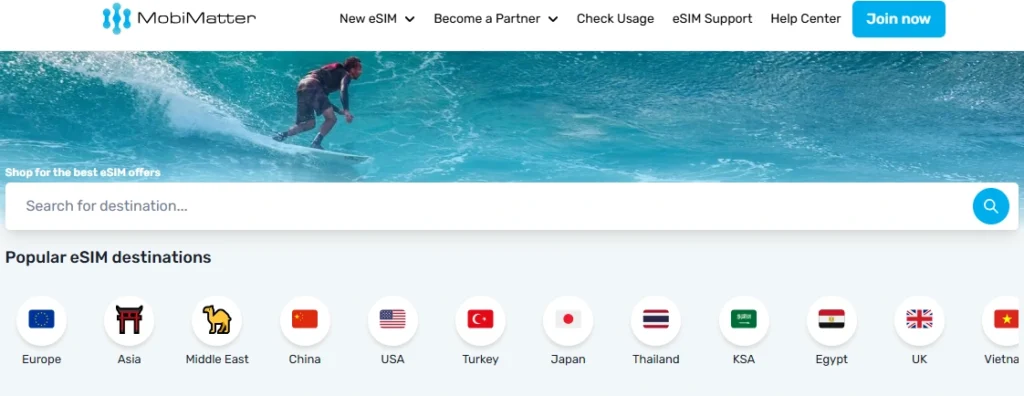
MobiMatter aggregates plans from multiple carriers and surfaces the lowest rate per destination, making it the most practical eSIM for journalists filing on a freelance budget.
Coverage spans 200+ countries. App ratings above 4.7 confirm reliable onboarding. For a stringer paid per story rather than salaried, the $50 ESIMDUDE discount on top of already low marketplace rates can cover an entire week of field connectivity for what a single hotel Wi-Fi day costs in many capitals.
👉Get MobiMatter for Freelance Press
Field Ops Specs:
7. Maya
Maya.net serves the eSIM for journalists on long-form assignments or bureau postings lasting 30 to 90 days in one region.
The regional plan depth delivers stronger local carrier partnerships in Southeast Asia, the Middle East, and Europe than global plans that distribute coverage thinly.
A reporter stationed in Beirut for two months covering regional developments needs strong, consistent local signal, not 200 country breadth.
Field Ops Specs:
8. iRoamly
iRoamly structures plans around pay-as-you-go mechanics with unlimited data options, and that model fits the eSIM for journalists who work intermittent assignments rather than continuous field deployment.
Between stories, the eSIM sits dormant with no recurring cost. When the editor calls, you top up and deploy. Hotspot tethering is supported. Coverage reaches 100 to 147 countries.
For correspondents who file six to eight international assignments per year with gaps between, this avoids subscription waste entirely.
Field Ops Specs:
Operational Criteria for Selecting an eSIM for Journalists on Assignment
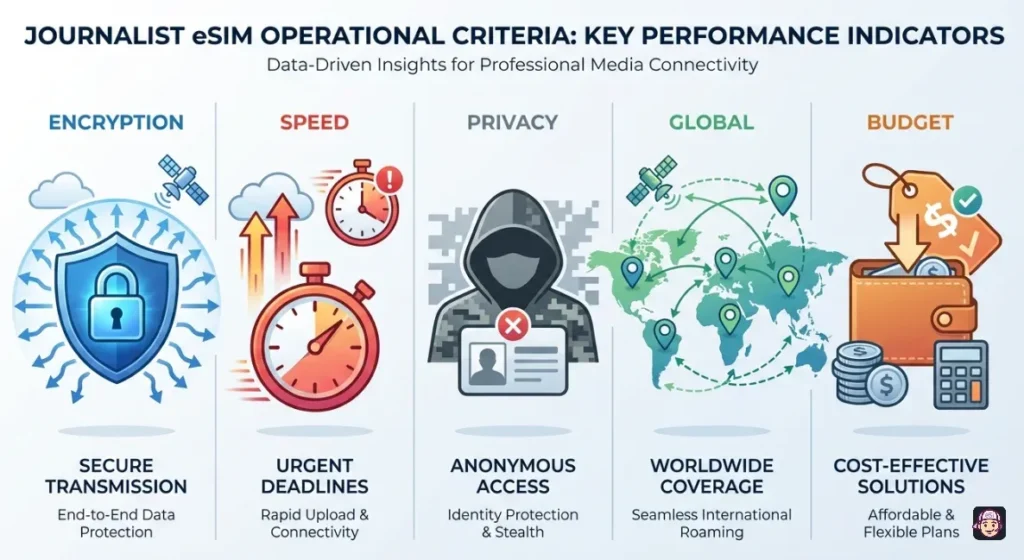
1. Source Protection and Encrypted Transmission
Digital surveillance of journalists increased across 36 European countries in 2025 alone. An eSIM for journalists must either include native encryption or sustain a VPN overlay without bandwidth collapse. Saily provides built-in IP masking.
All other providers require a separate VPN app, which demands an additional 15 to 20% bandwidth overhead. Budget data volumes accordingly.
2. Filing Speed Under Deadline Pressure
A 5 minute broadcast quality video package at 720p runs 500MB to 1GB on upload. A text story with photos uses 50 to 100MB.
Journalists filing daily need at least 3 to 5GB with sustained upload speeds above 5 Mbps. Throttled connections after daily fair use limits directly impact deadline performance. Providers with unlimited plans like Saily and IRoamly reduce that risk.
3. No-ID Activation in Sensitive Environments
Physical SIM cards in many countries require passport registration, which creates a traceable record. eSIM profiles install via QR code from the app with no local ID requirement.
That anonymity matters for journalists working in environments where press registration attracts official attention. Confirm the provider does not require local documentation.
4. Cross-Border Continuity for Multi-Country Stories
Stories rarely stop at one border. Gigsky's automatic carrier switching handles multi-country reporting routes silently. Airalo's pre-installed multi-country profiles cover the same need through a different mechanism. Country-specific plans that expire at each border create connectivity gaps during transit. Always choose regional or global plans for cross-border assignments.
5. Budget Reality for Freelance Press
Staff correspondents expense connectivity. Freelance stringers do not. MobiMatter's marketplace rates with the $50 ESIMDUDE code cover a week of field reporting for many destinations.
Amigo's $6 tethering-enabled plan handles a 3 day photo assignment at the lowest cost on this list. Match the plan to your filing volume and assignment length.
Field Questions About eSIM for Journalists Answered
Does an eSIM protect a journalist's communications from surveillance?
An eSIM alone does not encrypt data. It provides the data connection. For encryption, use a provider with native VPN like Saily, or layer Signal, ProtonMail, and a standalone VPN over any eSIM connection. RSF recommends that all journalists use a VPN when reporting abroad.
How much data does a journalist need per assignment day?
Text and photo filing uses 50 to 200MB per story. A 5 minute video package at broadcast quality uses 500MB to 1GB on upload. A full reporting day with research, communication, and filing typically consumes 3 to 5GB. Budget at least 10GB per week for a mixed-media assignment.
Which eSIM for journalists works in countries with internet censorship?
Saily's NordVPN layer bypasses platform blocks in countries that restrict VPN access. In at least 21 countries, standalone VPN apps are actively blocked. Saily's integrated encryption avoids that detection because the VPN runs within the eSIM connection itself, not as a detectable separate application.
Can a journalist keep their newsroom phone number while using an eSIM?
Yes. Dual SIM functionality runs your newsroom physical SIM for calls and messaging while the eSIM handles field data. Most iPhone 13 onwards and Samsung Galaxy S21 onwards support dual SIM natively. Set the eSIM as the data line and the physical SIM as the voice line.
Is there a free eSIM reliable enough for press field work?
Gigsky offers 100MB free, sufficient for testing activation but not for actual field filing. No free plan covers the 3 to 5GB daily volume a working journalist needs. Saily's 30 day refund is the safest option for testing full-plan performance in the field without financial commitment.

A Quiet Word Before You Deploy
The right eSIM for journalists depends on what you file and where you file it. Encrypted plans with native VPN serve investigative work in restricted environments.
Tethering-enabled budget plans serve freelance stringers filing text and photos. Pocket Wi-Fi devices serve photojournalists who cannot afford a dead phone battery.
Test any provider during a refund or trial window before depending on it for a story. Connectivity is infrastructure. Treat it like any other piece of field equipment and verify it works before the deadline, not during.
How we test eSIMs
iPhone 15 Pro Max
iPhone 17 Pro Max
Samsung Galaxy S25 ultra
iPad Pro M4
32+ eSIM Providers Tested
150+ Speed Tests Verified
10+ Countries Covered
Why You Can Trust eSIMNinja
We buy every eSIM plan with our own money — no freebies, no sponsored reviews. What you read is what we genuinely experienced.
We keep receipts. Every eSIM is personally purchased.