10 Best eSIM for Families 2026: Shared Data Made Easy


Your family lands in Rome. Four phones, two tablets, and zero mobile data. The airport SIM kiosk charges €15 per card, and your youngest has already asked for YouTube three times before you clear customs.
Multiply that by a family of four across a two-week trip, and you are looking at €120 just on SIM cards. An eSIM for families fixes that problem before the plane touches down.
One parent installs a travel eSIM, turns on the personal hotspot, and every family device connects through a single data plan. No queues. No plastic cards. No per-device charges for the kids.
According to GSMA data, over 6 billion eSIM connections will be active globally by the end of 2026. I have tested this exact hotspot setup with my own family across Europe and Southeast Asia, managing data for four devices from a single phone.
Below are 10 providers that handle the eSIM for families use case properly, ranked by how well they perform when multiple devices share one connection.
Why Families Specifically Need an eSIM for Families Travel Setup
An eSIM for families is not just a regular travel eSIM bought in bulk. The family use case demands something different. You need one data plan that shares reliably across multiple devices through a personal hotspot, without throttling the moment a second phone connects.
The technical setup works like this. One parent's phone holds the eSIM profile as the data line and the physical home SIM for calls and bank verification codes.
That parent enables the personal hotspot, and every other family member connects through Wi-Fi. On iPhone, this sits under Settings, then Personal Hotspot, then Allow Others to Join. On Android, it lives under Hotspot and Tethering.
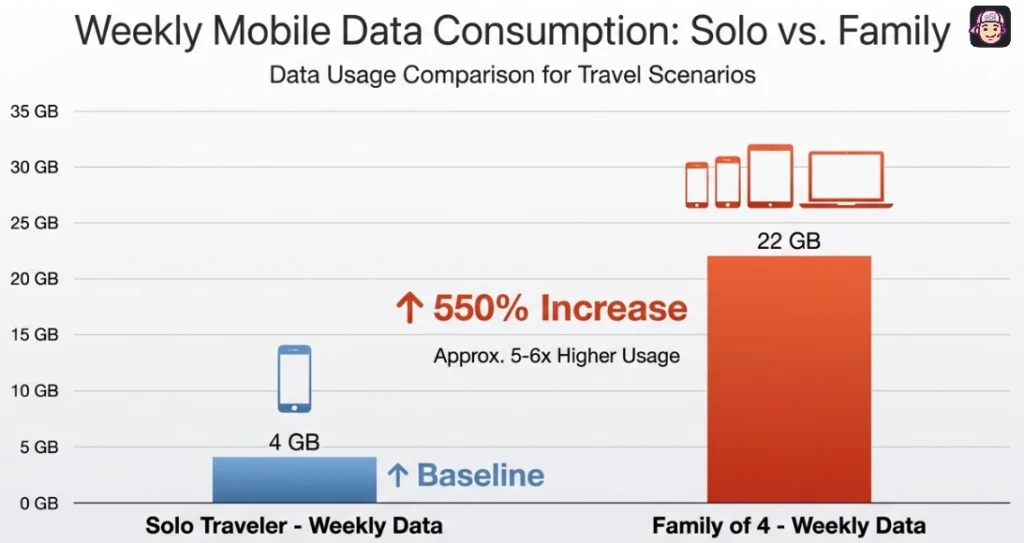
The key difference from solo travel eSIM use is data volume. A solo traveller uses 3 to 5GB per week. A family of four sharing one hotspot burns through 15 to 30GB in the same period, especially when children stream video or play online games.
That means the eSIM for families plan type that works best is a high data regional or global plan with confirmed hotspot tethering, not a budget 1GB per-country plan.
For eSIM for families, regional plans with 20GB or more and confirmed tethering support outperform individual country plans. One large plan shared via hotspot costs less than four separate eSIM purchases. Prioritise providers that explicitly allow hotspot sharing without speed restrictions.
10 Best eSIM for Families 2026 Tested and Ranked
| eSIM Provider | Primary Strength | Ideal Family |
|---|---|---|
| Saily | Built-in web safety tools | Privacy-focused parents |
| Airalo | Per-country plan flexibility | Multi-stop family holidays |
| Amigo eSIM | Hotspot on every plan | Tethering-dependent families |
| Billion Connect | Pocket Wi-Fi alternative | Families with young children |
| GigSky | Single profile, auto-switching | Cross-border road trips |
| MobiMatter | Lowest per-GB family cost | Budget-conscious families |
| Instabridge | Wi-Fi map plus eSIM combo | Data-saving families |
| Maya | Regional long-stay plans | Extended family holidays |
| iRoamly | No-subscription top-ups | Occasional family travellers |
| Lotso Travel | Pre-trip activation window | Organised planners |
1. Saily
Saily brings a feature to the eSIM for families space that no other provider on this list matches. Built by the NordVPN team, every plan includes ad blocking, malicious URL filtering, and IP masking.
When your teenager connects through the family hotspot at a café in Barcelona, those protections cover the entire connection. Plans span 200+ countries with the Ultra tier offering unlimited data and 8% credit cashback for repeat trips.
The 30 day refund policy gives families a safety net if the destination coverage falls short.
👉Get Saily for Your Family
What Parents Get:
Pros
Cons
Why Saily for Families: The web protection layer is what sets Saily apart for the eSIM for families use case. Children browsing through a shared hotspot get the same ad blocking and URL filtering that the parent's phone receives. Combined with 200+ country coverage and the 30 day refund, it covers both safety and flexibility.
2. Airalo
Airalo handles the eSIM for families who visit multiple countries on a single holiday better than most providers.
The Discover Global plan covers 190+ countries, and you purchase exactly the data volume your family needs rather than committing to an unlimited subscription. The app lets parents pre-install profiles for each destination before departure, so there is no fiddling with QR codes while managing luggage and children at the airport.
Hotspot sharing is supported on most global and regional plans. The per-GB pricing model keeps costs low for families who use data mainly for maps and messaging rather than streaming.
What Parents Get:
Pros
Cons
Why Airalo for Families: The pre-install workflow is the real family advantage. Parents set up everything at home, land at the destination, and data works immediately. For families visiting 2 to 3 countries on one holiday, one regional profile covers the whole itinerary without per-country purchases.
3. Amigo eSIM
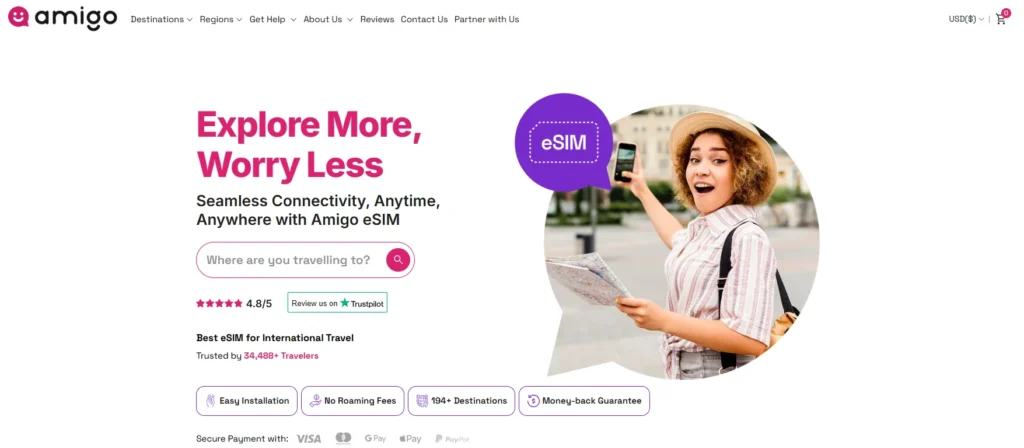
Amigo eSIM matters for the eSIM for families use case because of one policy that many competitors restrict.
Hotspot tethering is enabled on every single plan tier, including the $6 country plans. That means a family on a tight budget does not need to upgrade to a premium tier just to share data with the kids' tablets. Coverage spans 128 countries with local, regional, and global options.
I tested the activation in Thailand, and the eSIM connected within two minutes of scanning the QR code. The money-back guarantee protects families against failed activations at foreign airports.
👉Get Amigo eSIM for Families
What Parents Get:
Pros
Cons
Why Amigo for Families: The universal tethering policy is the deciding factor. A parent buying the cheapest $6 plan can still share data with every family device. Combined with the 12% ESIMDUDE discount, this is the most budget-friendly eSIM for families option on the list.
4. Billion Connect

Billion Connect approaches the eSIM for families problem from a different angle entirely. Beyond standard eSIM plans, the company offers pocket Wi-Fi devices that families can rent or buy to create a dedicated mobile hotspot separate from any parent's phone.
This means the hotspot device travels in a bag or stroller pocket, and every family member connects without draining a parent's phone battery. For families with toddlers where the parent's phone needs to stay charged for photos and emergency calls, this separation is genuinely practical.
What Parents Get:
Pros
Cons
Why BillionConnect for Families: The pocket Wi-Fi option solves the biggest practical complaint families have with the eSIM for families hotspot method. Parents no longer sacrifice their phone battery to keep everyone online.
5. GigSky
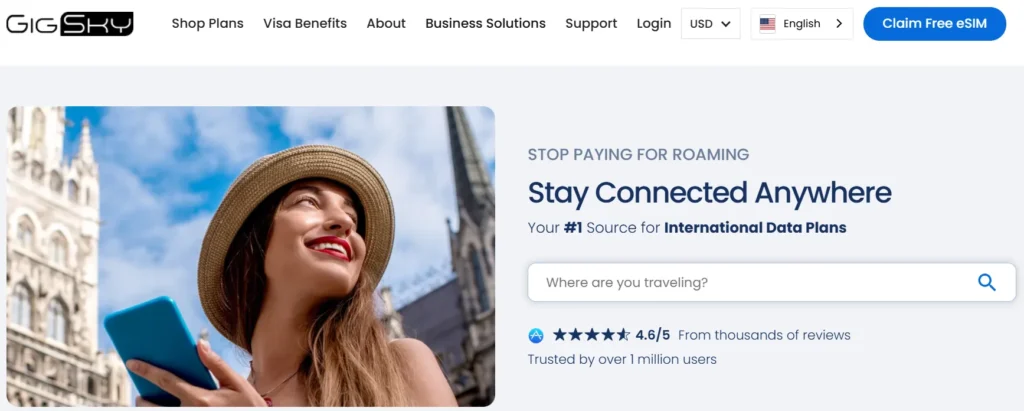
GigSky runs as a full MVNO, and that technical distinction matters for the eSIM for families on a cross-border European road trip.
One eSIM profile automatically switches carrier networks as the family van crosses from France into Spain, then Portugal, without anyone touching a phone setting. The free 100MB trial lets parents test activation at home before the trip.
Daily throttle limits kick in around 2.5GB per day, which covers map navigation and messaging but restricts streaming for a full family. For families who drive between countries and need uninterrupted navigation data, the automatic switching removes a genuine source of stress.
👉Get GigSky for Family Road Trips
What Parents Get:
Pros
Cons
6. MobiMatter
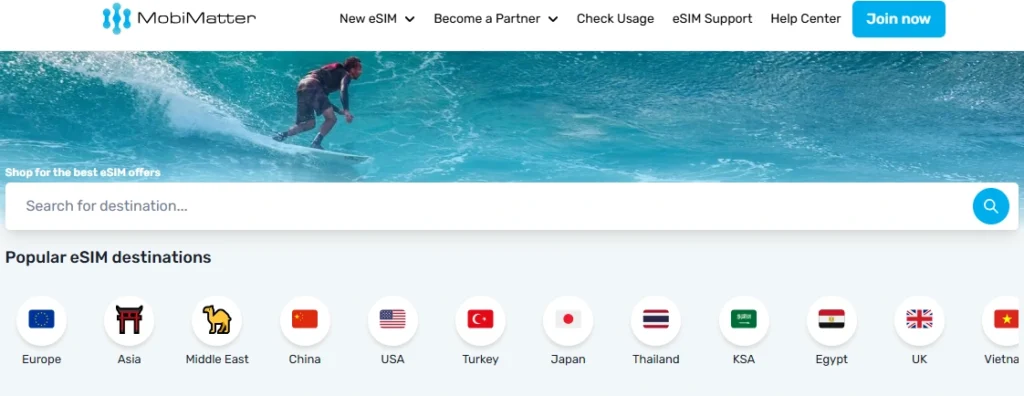
MobiMatter uses a marketplace model that surfaces the cheapest available plan per destination, making it the strongest option for eSIM for families on a strict holiday budget.
With 200+ countries available, the aggregation approach means parents see plans from multiple underlying carriers and pick the best rate. For a family of four sharing a 20GB hotspot plan, saving even $0.50 per GB translates to meaningful savings.
App ratings above 4.7 confirm the onboarding process works smoothly. The trade-off is that carrier quality varies depending on which backend provider fills the plan.
What Parents Get:
Pros
Cons
7. Instabridge
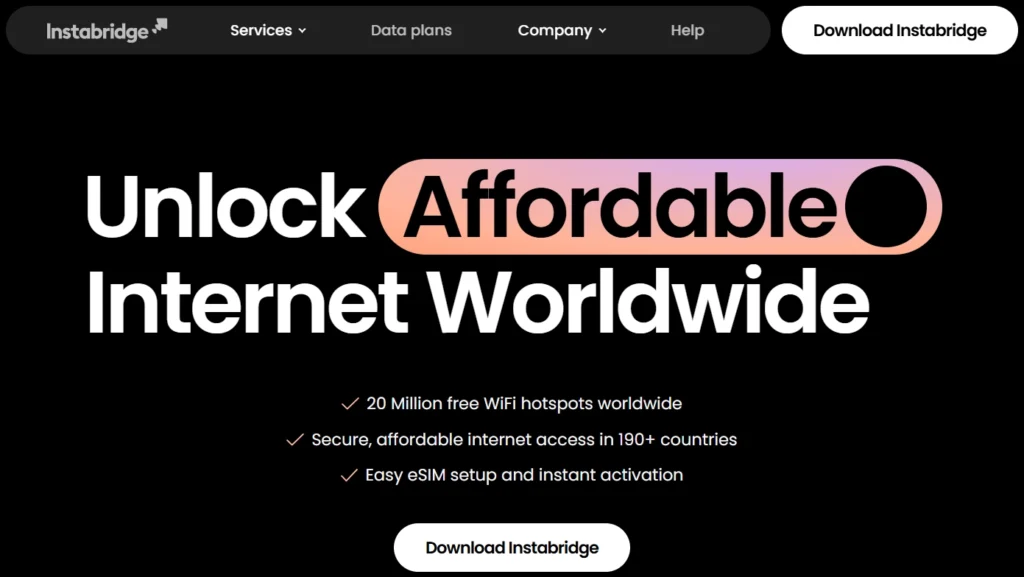
Instabridge originated as a Wi-Fi mapping tool, and that heritage gives it a unique angle for the eSIM for families use case.
The app combines eSIM data plans with a global map of free, verified Wi-Fi hotspots. For families touring a city, switching between the eSIM data and free Wi-Fi at restaurants and museums stretches the data budget significantly further.
One eSIM profile works across all countries without reinstalling. The automatic pay-as-you-go feature means the plan tops up when data runs out, avoiding the dreaded mid-trip dead zone. Coverage spans 190+ countries with 4G and 5G support in most major regions.
What Parents Get:
Pros
Cons
8. Maya
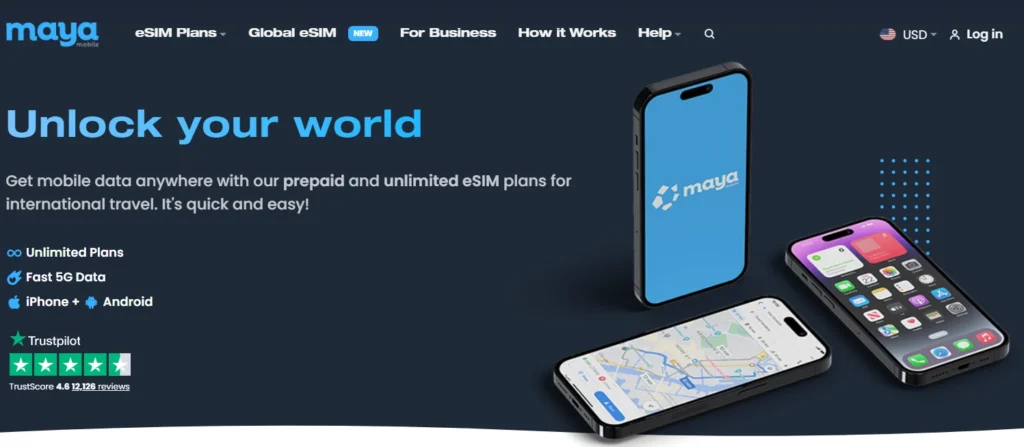
Maya.net fits the eSIM for families taking extended holidays of three to four weeks in a single region.
The regional plan structure delivers deeper coverage in Southeast Asia, Europe, and the Middle East than most global providers offer. Plans run on data-only profiles, which pair naturally with a dual SIM family setup where the physical SIM handles calls and bank codes.
For families renting a villa in Bali for a month or spending summer in the Greek islands, Maya's regional depth outperforms generic global plans that spread thin across 200 countries.
What Parents Get:
Pros
Cons
9. iRoamly
iRoamly structures its plans around pay-as-you-go top-ups rather than subscriptions, and that model serves the eSIM for families who travel once or twice a year rather than monthly.
Between trips, the eSIM sits dormant with zero recurring charges. When the next family holiday arrives, parents top up the balance and activate.
For families who do not want another monthly subscription sitting unused for 10 months of the year, this approach makes financial sense. Real-time data tracking in the app helps parents monitor how quickly the family hotspot is consuming data.
What Parents Get:
Pros
Cons
10. Lotso Travel
Lotso Travel lets families purchase and install the eSIM weeks before departure, with an extended activation window that only starts the plan timer when the family actually arrives.
For the eSIM for families audience, this removes the most stressful part of the process. Parents set everything up at home on a quiet evening, not at a chaotic airport gate with tired children. The referral programme rewards families who recommend the service to friends planning their own trips.
Coverage spans popular family holiday corridors, and multiple data tiers accommodate both light use and heavy streaming families.
What Parents Get:
Pros
Cons
How to Pick the Right eSIM for Families Travelling Together
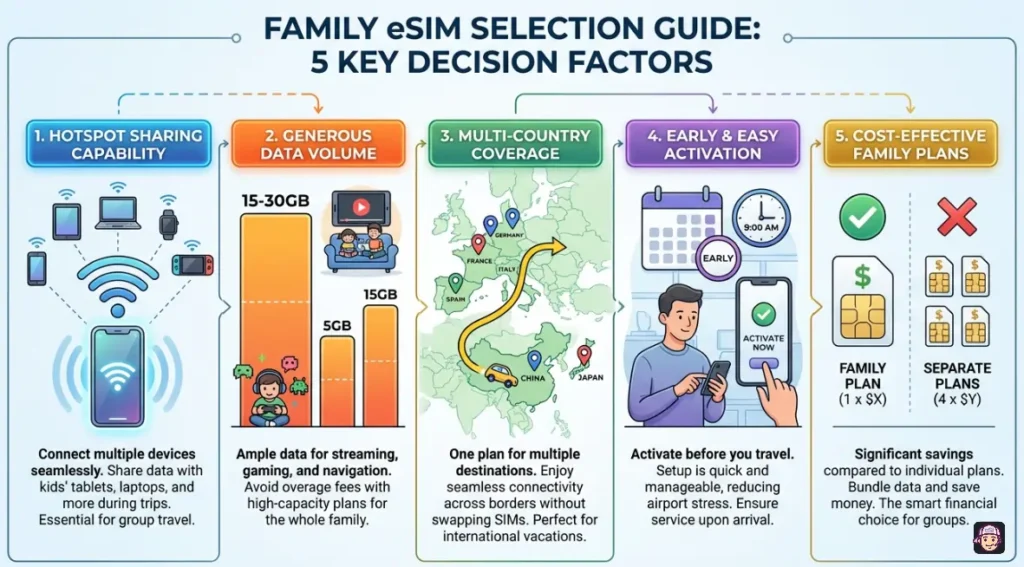
1. Hotspot Sharing and Device Limits
The core of any eSIM for families setup is hotspot tethering. Not all providers allow it, and some restrict the number of connected devices.
iPhone hotspots typically support 5 simultaneous connections. Android varies by model but usually handles 8 to 10. A family of four with phones and a tablet needs at least 5 slots.
Confirm tethering is allowed before purchase. Amigo eSIM enables it on all tiers. Airalo supports it on most global plans.
2. Data Volume for Families With Children
Children consume data differently than adults. Streaming YouTube on a tablet uses roughly 1GB per hour. A family of four sharing a hotspot for maps, messaging, and moderate social media needs around 20 to 30GB per week.
For families with younger children who stream constantly, unlimited plans from Saily or high-cap plans from MobiMatter make more sense. Families who mainly use maps and WhatsApp can get by with 10 to 15GB per week and save with Airalo's per-GB pricing.
3. Multi-Country Coverage for Family Road Trips
Families driving across Europe or island-hopping in Southeast Asia need seamless border crossing. GigSky's automatic carrier switching handles this without settings changes. Airalo's regional plans also cover multiple countries under one profile.
Country-specific plans that expire at each border create constant reinstallation headaches, the last thing any parent wants mid-drive with restless children.
4. Pre-Trip Activation for Busy Parents
Setting up an eSIM at the airport while managing boarding passes, passports, and children is a recipe for frustration. Providers like Lotso Travel and Airalo let parents install the eSIM at home days or weeks before departure.
The plan activates only when you arrive. Prioritise providers with this pre-activation feature if your family travels with young children.
5. Total Family Cost per Trip
Calculate the true cost by multiplying per-GB rates by your estimated family data consumption, not just the plan sticker price. A $5 plan covering 1GB lasts one family roughly half a day with moderate use. Four individual plans at $10 each total $40.
One shared 20GB plan at $25 with tethering costs nearly half. Always factor in available coupon codes. ESIMDUDE saves 15% on Gigsky, 12% on Amigo, 10% on Saily, and $50 on Mobimatter.
Common Questions About eSIM for Families Answered
How do I share one eSIM with my whole family?
Install the eSIM on one parent's phone. Go to Settings, then Personal Hotspot on iPhone or Hotspot and Tethering on Android. Enable sharing and set a password. Other family members connect to this hotspot like any Wi-Fi network. The parent controls when the hotspot is on or off.
Which eSIM for families has the best coverage in 2026?
Saily and Mobimatter both cover 200+ countries, making them the broadest options for families. For automatic border switching without manual intervention, Gigsky's single-profile MVNO approach performs most reliably on multi-country family road trips.
How much does an eSIM for families cost for a two-week holiday?
A family of four using 20 to 30GB over two weeks should expect to pay $20 to $45 depending on the provider and destination. Amigo eSIM starts at $6 for single-country plans, while Saily and Gigsky offer broader coverage at higher tiers. Coupon codes like ESIMDUDE bring those costs down by 10 to 15%.
Can children's devices use an eSIM directly?
Only if the child's device supports eSIM. Most iPhones from iPhone 13 onwards and Samsung Galaxy from S21 onwards work. For younger children with older devices or iPads without cellular, the hotspot sharing method through a parent's phone is the practical solution.
Is an eSIM for families safe to use with children online?
The eSIM itself does not include parental controls. However, Saily adds web protection, ad blocking, and URL filtering through its NordVPN heritage. Parents should also enable Screen Time on iPhone or Family Link on Android to manage what children access through the shared connection.
Can I get a free eSIM for families to test first?
Gigsky offers a 100MB free trial for new users, enough to test the activation process but not enough for actual family use. No provider offers a free ongoing plan at family data volumes. The most risk-free approach is Saily's 30 day money-back guarantee, which lets families try the full plan and refund if coverage disappoints.

Final Thoughts
For families travelling in 2026, Saily stands out by combining 200+ country coverage with built-in web protection that works across every device connected to the family hotspot.
Amigo eSIM is the best budget pick because hotspot tethering works on every plan tier, even the $6 ones. And Airalo remains the most practical for multi-destination family holidays with its pre-install and top-up flexibility.
Test with Gigsky's free 100MB trial or lean on Saily's 30 day refund to confirm coverage before your departure date. A few minutes of setup at home can save your family hours of frustration abroad.
How we test eSIMs
iPhone 15 Pro Max
iPhone 17 Pro Max
Samsung Galaxy S25 ultra
iPad Pro M4
32+ eSIM Providers Tested
150+ Speed Tests Verified
10+ Countries Covered
Why You Can Trust eSIMNinja
We buy every eSIM plan with our own money — no freebies, no sponsored reviews. What you read is what we genuinely experienced.
We keep receipts. Every eSIM is personally purchased.