8 Best Global eSIM 2026 for Seamless Multi-Country Data


You land in Frankfurt, swipe your phone, and your home carrier has already started charging $15 a day in roaming fees. Three days later you cross into the Netherlands and the data slows to 2G before you have even opened Google Maps. That is the exact pain a global eSIM is built to eliminate.
The global eSIM market surpassed $4 billion in 2026, and the number of providers promising worldwide connectivity has never been higher. Not all of them follow through across borders, in rural regions, or on dual-SIM Android setups.
This guide ranks the eight strongest global eSIM options available right now, with real pricing, carrier context, and honest limitations included.
What a Global eSIM Actually Does Across Country Borders

A global eSIM is a digital SIM profile that lives on your phone's embedded chip and automatically connects to local carrier networks as you cross borders. There is no physical SIM swap, no airport vending machine, and no roaming activation call to your home carrier.
Installation runs under five minutes. You scan a QR code from the provider's app, the profile loads onto your device, and you are connected before leaving your gate. The critical difference between a global eSIM and a regional plan is IMSI routing.
Global plans connect through partner carrier agreements across 100 to 200+ countries, so one profile covers a Singapore layover, a Tokyo work sprint, and a Paris city break without buying new plans between each leg.
For trips crossing more than three borders, a global pay per GB plan typically beats buying individual country eSIMs. The per-GB rate is slightly higher, but the saved time and coverage breadth more than offset the premium for anyone on a multi-continent itinerary.
For any global eSIM plan, always confirm whether hotspot tethering is explicitly permitted and check the daily fair-use threshold. Some plans throttle to 2G after 1GB of daily use, and that detail does not always appear prominently in the plan description.
8 Best Global eSIM Plans of 2026 Ranked and Reviewed
| Global eSIM Provider | Primary Strength | Ideal User |
|---|---|---|
| Airalo | 130+ country Discover plan | Multi-continent nomad |
| MobiMatter | Aggregated global deals | Value-conscious traveller |
| Amigo eSIM | 194-destination reach | Long-haul frequent flyer |
| GigSky | Direct carrier partnerships | Business road warrior |
| Saily | Hotspot-friendly global plans | Remote working traveller |
| Maya | Lightweight global connectivity | Weekend globe-hopper |
| iIRoamly | 147-country unlimited plans | Heavy data traveller |
| Billion Connect | Budget-tier global access | Cost-first backpacker |
1. Airalo
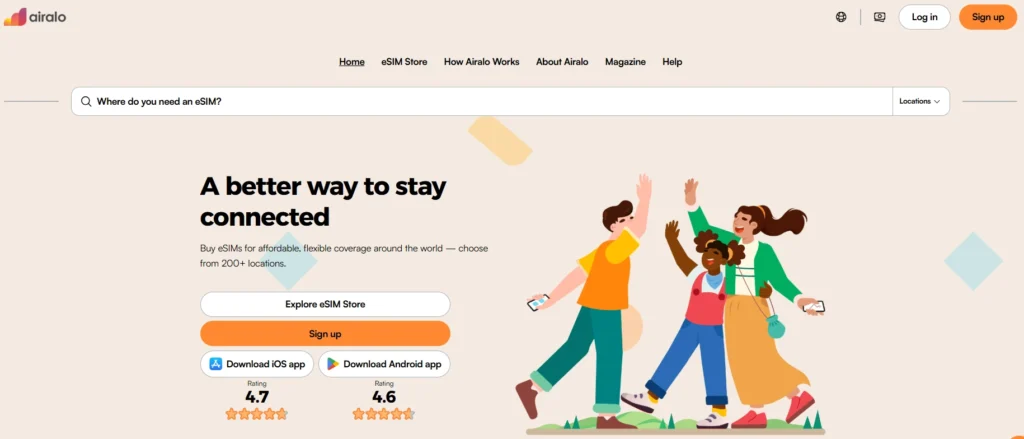
Airalo built its reputation on the Discover and Discover+ global plans, which cover 130 and 139 countries respectively with access to 5G networks in major destinations.
A 20GB global plan runs approximately $65 for 7-day validity or $66 for 365 days, making the long-validity option genuinely practical for nomads who want a single global eSIM on standby across an entire year of travel.
Activation is QR code based and completes in under three minutes through the Airalo app, which also manages multiple eSIM profiles for different destinations from one screen.
Pros
Cons
Why Airalo for Global eSIM: The Discover+ plan's 139-country reach and 365-day validity make it the most flexible single-purchase global eSIM for travellers who move between continents unpredictably. The QR activation speed is the fastest in this category.
2. MobiMatter
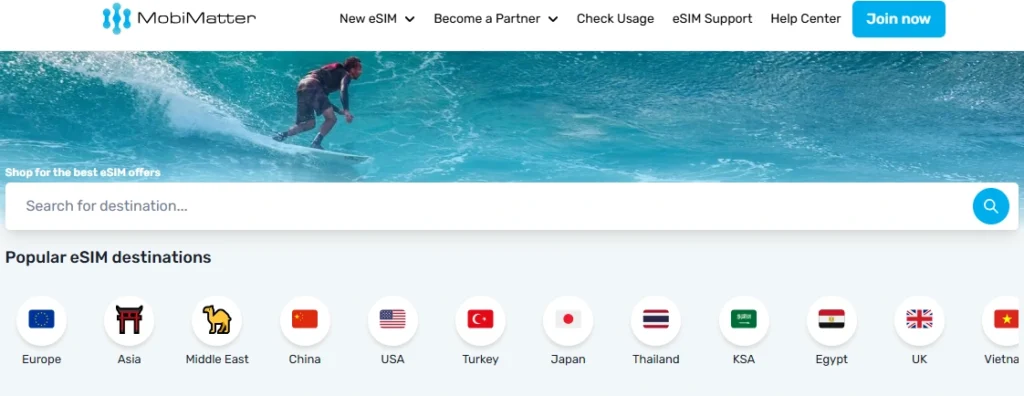
Mobimatter takes an aggregator approach to global eSIM plans, sourcing carrier rates from multiple network operators and passing competitive pricing to customers.
The 26GB global plan runs $74.99 for 365 days and the 13GB option sits at $41.99 for the same validity period, which works out to approximately $2.90 per GB on the larger bundle.
Hotspot is available on core global plans, and real-time in-app usage tracking lets you monitor consumption to the megabyte without guessing.
👉Get MobiMatter Global eSIM
Pros
Cons
3. Amigo eSIM
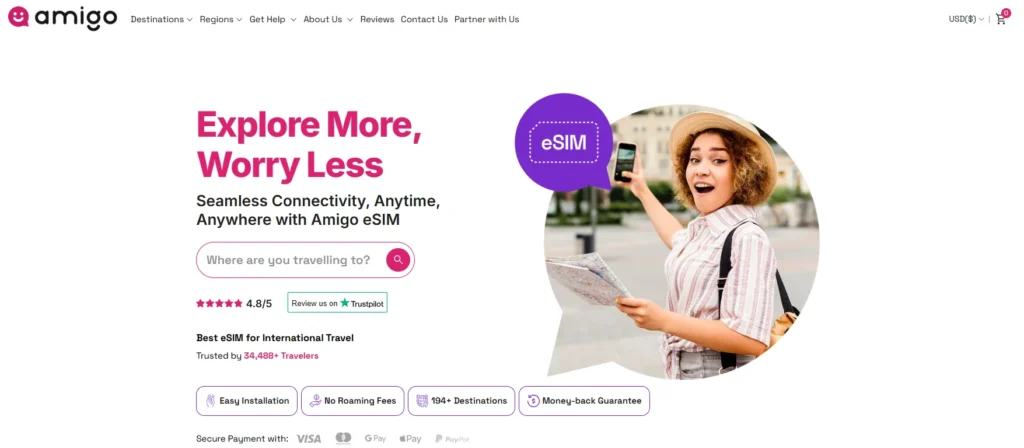
Amigo eSIM reaches 194 destinations with local, regional, and global plan tiers, making it one of the widest catalogs on this entire list.
The global tier connects through strong carrier partnerships including Telus-backed networks for North American coverage, where download speeds of 46 Mbps have been independently recorded.
Amigo also performs reliably on dual-SIM Android devices, which matters for anyone travelling with a global eSIM alongside an active home number.
👉Get Amigo Global eSIM
Pros
Cons
4. GigSky
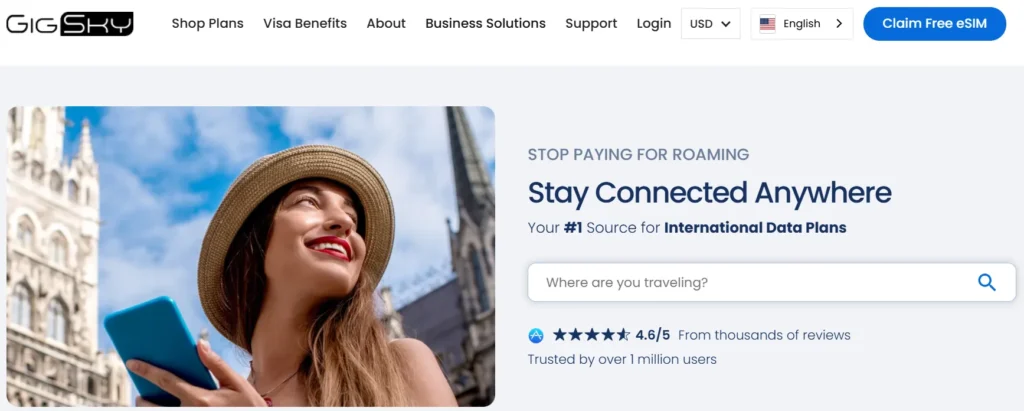
Gigsky manages its own carrier agreements across 200+ countries and territories, working directly with 400+ carrier partners rather than routing through resellers.
That direct structure is why Gigsky performs more consistently in markets where aggregator-based global eSIM providers show signal gaps.
The Europe plan alone covers 41 countries with 5G support where available, and the global tier handles multi-continent trips without manual APN reconfiguration at each border.
👉Get GigSky Global eSIM
Pros
Cons
Why Gigsky for Global eSIM: Direct carrier agreements across 200+ countries mean fewer handoff failures when crossing from one region to the next. For business travellers on multi-continent itineraries, Gigsky removes the signal uncertainty that cheaper aggregator plans carry.
5. Saily
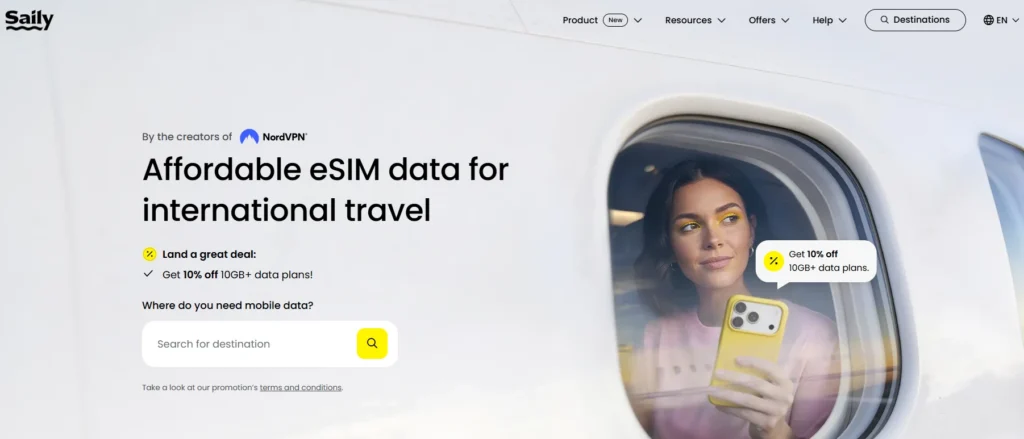
Saily is developed by the team behind NordVPN, and that engineering background is visible in how the app and plan transparency are handled.
The global plan covers 121 destinations starting from $8.99, with a 20GB option running $66.99 for 365-day validity.
What separates Saily from comparable global eSIM providers is explicit hotspot permission with no stated speed cap on tethering, which is a significant detail for remote workers travelling with laptops who rely on their phone as a mobile router.
Pros
Cons
6. Maya
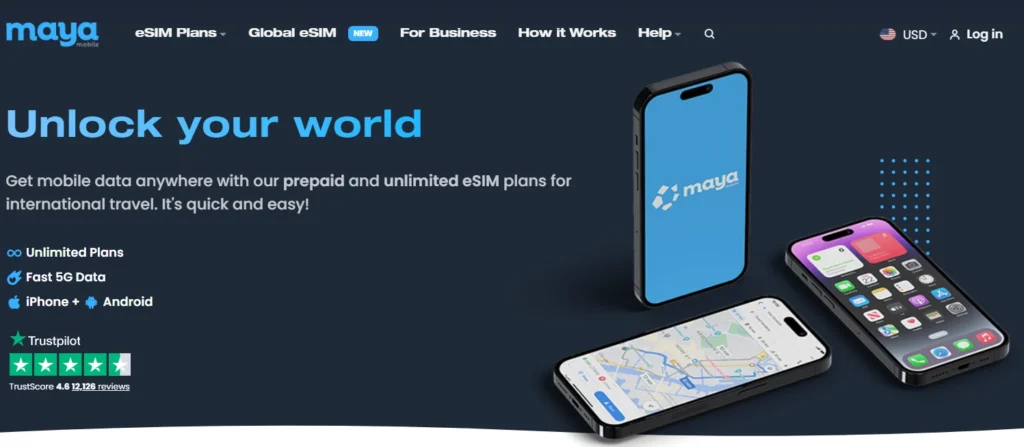
Maya approaches global eSIM connectivity with a focus on clean, friction-free activation across major travel corridors in Europe, Asia, the Americas, and the Middle East.
The platform is designed for travellers who set up their eSIM the evening before departure and want it to work at the arrival gate without troubleshooting. Maya's plan structure is straightforward, with no confusing upsell tiers or mid-purchase redirects.
Pros
Cons
7. iRoamly
iRoamly is the strongest pick on this list for data-heavy travellers. Global plans reach around 147 countries and the unlimited-style options run on a fair-use model where full-speed data continues until a daily threshold of roughly 2 to 3GB before reducing.
For a two-week run across Southeast Asia or Latin America, iRoamly's larger data bundles deliver a significantly lower per-GB cost than comparable fixed-data plans on aggregator platforms.
Pros
Cons
Why IRoamly for Global eSIM: For travellers burning 5GB or more per day across countries in Asia, the Americas, or Africa, IRoamly's unlimited-style global plans deliver better cost-per-GB than any fixed-data option at a comparable price point.
8. Billion Connect

Billion Connect targets the budget end of the global eSIM market with plans built for cost-conscious travellers who need dependable connectivity without premium pricing. Coverage focuses on core global destinations across Europe, Asia, and the Americas.
It is a practical option for backpackers and short-stay visitors who primarily need maps, messaging, and basic browsing rather than high-volume data streaming.
Pros
Cons
Four Criteria That Separate Good Global eSIM Plans from Weak Ones
1. Carrier Depth Behind the Global Coverage Map
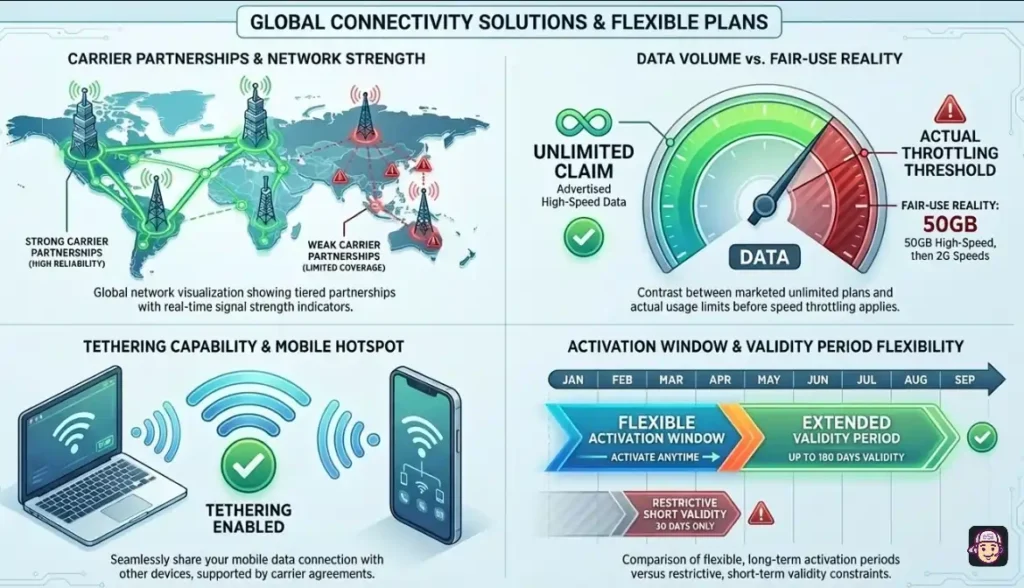
The difference between a global eSIM that holds LTE through a Tokyo subway tunnel and one that drops signal entirely often comes down to direct carrier agreements versus secondary MVNO routing.
Gigsky's 400+ direct carrier partnerships and Amigo's 194-destination reach both reflect investment on the carrier side. Always check which specific networks a provider names for your key destinations rather than accepting a country count at face value.
2. Data Volume Versus Daily Fair-Use Reality
A 10GB global plan sounds generous until day four of a work trip when navigation, video calls, and social media have burned through 4GB. IRoamly's unlimited-style plans with daily thresholds work better for heavy users.
Airalo and Saily's fixed-data plans work better for moderate users who primarily need messaging and maps. Match the plan structure to your real daily usage pattern, not an optimistic estimate.
3. Hotspot Access for Laptop-Dependent Travellers
Tethering is not automatically included on global eSIM plans. Saily explicitly permits hotspot sharing with no stated speed cap. IRoamly allows it on most plans with per-plan variation.
Airalo's permission varies by individual plan rather than being blanket across the global tier. If tethering a laptop is part of your travel workflow, confirm it in the plan details before purchasing.
4. Plan Validity and Activation Window Flexibility
A 7-day global plan that expires while you are still in transit is a frustrating failure point. Airalo and MobiMatter both offer 365-day plans that sit dormant until first use.
Saily gives a 30-day window from purchase before automatic activation kicks in. For travellers who book trips months in advance, longer activation windows and validity periods are as important as coverage breadth.
What Travellers Ask About Global eSIM Plans
How do I install a global eSIM?
Purchase a plan from your chosen provider and receive a QR code via app or email. On iOS go to Settings, then Mobile Data, then Add eSIM. On Android go to Settings, then Network, then SIM, then Add eSIM. Scan the QR code and the profile installs in under five minutes. Most providers recommend installing before departure.
Which global eSIM has the best country coverage in 2026?
Gigsky leads by territory count at 200+ countries with direct carrier agreements. Amigo reaches 194 destinations, and Airalo's Discover+ plan covers 139 countries. For sheer reach, Gigsky. For app quality and activation speed, Airalo is the most consistent performer.
How much does a global eSIM cost in 2026?
Entry-level global eSIM plans start from $5 to $9 for 1GB across 100+ countries. Mid-range options of 10GB to 20GB run $40 to $70. Saily's 20GB global plan costs $66.99 for 365 days, and Airalo's equivalent is priced at approximately $66.
Can I keep my home number active while using a global eSIM?
Yes. On dual-SIM capable devices, your physical SIM keeps your home number active for calls and texts while the global eSIM handles data separately. Amigo performs particularly well in this setup on Android devices. Most modern iPhones from the iPhone XS onwards and the majority of current Android flagships support this configuration.

Picking the Right Global eSIM Before Your Next Departure
For most travellers crossing multiple countries in 2026, Airalo and Gigsky cover the widest ground with the most reliable carrier relationships. iRoamly is the clear call for data-heavy users who stream, video-call, and tether daily across time zones.
Saily earns its position for remote workers who need confirmed hotspot access without chasing plan-by-plan permissions.
If budget is the deciding factor, Mobimatter's aggregated pricing and BillionConnect's entry-level rates both deliver usable global connectivity at lower cost.
Activate before you fly, verify tethering permissions before you rely on them, and read the fair-use policy before assuming any unlimited plan delivers truly uncapped speeds.
How we test eSIMs
iPhone 15 Pro Max
iPhone 17 Pro Max
Samsung Galaxy S25 ultra
iPad Pro M4
32+ eSIM Providers Tested
150+ Speed Tests Verified
10+ Countries Covered
Why You Can Trust eSIMNinja
We buy every eSIM plan with our own money — no freebies, no sponsored reviews. What you read is what we genuinely experienced.
We keep receipts. Every eSIM is personally purchased.